|
|
|
REFLECTIONS
Monthly News & Updates
|
|
|
|
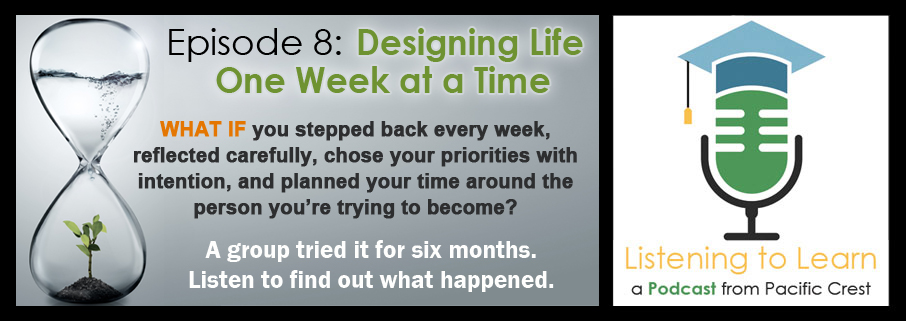
Episode 8
Designing Life One Week at a Time
|
|
|
From August 1 to January 31, 2025, fifty
participants committed to an unusual
experiment.
For six months, they agreed to design
their lives one week at a time.
The premise of Phase III of the Self-Growth
Project was simple: most people live
their lives reacting to what shows up.
We asked something different. What if
you stepped back every week, reflected
carefully, chose your priorities intentionally,
and planned your time around the person
you are trying to become?
Instead of adding more activity, the
project aimed to increase intention.
Instead of chasing improvement in scattered
ways, it invited participants to build
a steady weekly rhythm of reflection,
planning, action, and review.
Every week followed the same pattern.
Participants paused to reflect on what
had actually happened in their lives.
They identified insights from their
real experiences. They clarified what
mattered most for the coming week. They
created a focused growth plan. Then
they designed their week to match those
intentions. Each participant also met
weekly with a coach to review decisions,
challenges, and direction.
This was
not
a motivational program.
It was a six-month practice of learning
to direct your own growth.
At the end of January 2026, we asked
a simple question:
What actually changed?
(click to find out)
|
|
Based on a review of Phase III of the
Self-Growth Project by Steve Beyerlein.
Created with the help of Notebook LM.
|
|
|
This month's news from the Self-Growth
Community is featured as the newest
episode in our Podcast,
Listening to Learn.
This is one you won't want to miss.
Overview:
Phase III of the Self-Growth Project
was a six-month experiment where participants
moved from reactive living to intentional
self-direction. By adopting a weekly
rhythm of reflection, planning, and
coaching, individuals shifted their
focus from superficial performance to
meaningful internal growth. Key outcomes
included a disciplined slowing down,
the ability to let go of misaligned
goals, and improved discernment during
major life transitions. Ultimately,
the study suggests that personal development
is not about accumulating information,
but about the steady practice of presence
and the courage to choose one's path
deliberately. Participants concluded
the program feeling more grounded and
empowered to author their own lives
through consistent, small-scale reflection.
|
|
|
Self-Growth Tip:
Start with Your Foundation
|
|
|
SELF-Growth is about
not
letting outside forces dictate
our approach to life. But just
as no man is an island, so too
didn’t any of us spontaneously
spring into being, full-grown.
Influences such as parents,
community, educational experiences,
friends, work environment, ethnic
culture, and religion have contributed
to shaping who we are. Unless
we’re honest with ourselves
and willing to identify traits
that while familiar might not
be good or good for us, the
lingering effect of our conditioning
ends up being the foundation
and much of the form of who
we’re trying to become. (And
it’s really tough to build a
new house when you’re restricted
to the previous foundation and
walls!)
In other words, the forces
that initially shaped us can
be the strongest impediments
to our
own
growth. Getting around this
requires understanding who we
really are now and contrasting
that with our ideal self (who
we really want to be). If we
can identify those differences,
we can successfully change the
aspects of ourselves that we
didn’t intend, but that conditioning
produced. It is never too late
to do a make-over of who you
desire to be!
|
|
|
|
Targeting a Learning Skill:
Gaining Perspective
|
|
|
(The complete listing of learning skills
is available at
www.processeducation.org/cls/web/)
This month's learning skill:
Gaining Perspective
adopting
new points of view based on a message
Where and how to TARGET it:
|
|
|
|
|
Helping young children step outside
their own "bubble" can be challenging,
but it is a foundational social and
cognitive skill.
-
Model Perspective-Shifting
Children learn by example, so show
them how you change your mind when
you get new information.
-
The "Feelings Detective"
Use gestures to prompt a shift in
view. If a friend is sad, cup your
hands like goggles and ask, "What
do you see through their eyes right
now?".
-
The "Switch-a-Roo" Game
Play a classic game like "Simon
Says," but with a twist: "The Cat
Says". Children must act out how
a cat would interpret a command
(like "get the mail") versus how
a human would.
-
Storybook Q&A
Ask open-ended questions during
reading. "If the Big Bad Wolf was
actually just really hungry and
cranky, how does that change the
story?". This teaches them to engage
thoughtfully with the message of
the text from a different angle.
|
|
|
|
|
In the liberal arts, the "single best
tool" for teaching this is modeling
the ability to hold multiple viewpoints
simultaneously.
-
The Persona Interview
Incorporate theater into the course.
Have one student take on the persona
of a historical figure like Emily
Dickinson or Freud, while others
interview them from the perspective
of a modern-day critic.
-
Role-Playing Empathy
Have students role-play a historical
conflict where they must defend
the side they personally disagree
with. This allows them to practice
empathy, which is central to gaining
perspective.
-
Moderated Perspective-Sharing
Hold discussions where the goal
is to "extract maximum meaning"
from a classmate’s divergent point
of view rather than winning a debate.
-
The "Parallel Narrative"
Task students with rewriting a famous
scene from a different character’s
perspective to see how the "message"
of the scene shifts.
|
|
|
|
|
STEM students can strengthen this skill
by looking at data and problems through
different "frames" or "schemas."
-
Teaming and Collaboration
Use group work where students must
figure out how to integrate different
technical approaches to the same
problem.
-
The "Client" Perspective
Play "clients and specifications".
The instructor can act as a non-technical
client with specific needs (e.g.,
a "sustainable bridge" or a "user-friendly
app"). Students must gain the client's
perspective to ensure the engineering
violates no fundamental principles
while meeting the human need.
-
Intervene on Process
As students work in teams, do "spot
models" of how to pivot one's perspective
when a result violates a fundamental
principle.
-
Cross-Disciplinary Solving
Have an engineering student explain
a solution to a "biological" client,
forcing them to adopt a different
scientific schema.
|
|
|
|
|
There are many opportunities to engage
in gaining perspective in our personal
lives, especially with friends.
-
The "Judgment Catch"
Catch yourself when you find yourself
being judgmental during a conversation.
Pause and work to understand the
other person's perspective instead
of just waiting to speak.
-
Foreign Film "Sub-Swapping"
Watch a foreign film and try to
match the subtitles with the body
language. Discuss with a friend:
"How would this scene change if
it were set in our hometown?".
-
Perspective Cinema
Watch a commercial or film and try
to "read" a side character. What
are their motivations, and how do
they see the "hero" of the story?.
-
The "In-Perspective" Game
Similar to "INactive Listening,"
watch a show and try to catch the
moment a character refuses to adopt
a new point of view. Note how that
refusal creates the conflict and
compare notes with a friend.
|
|
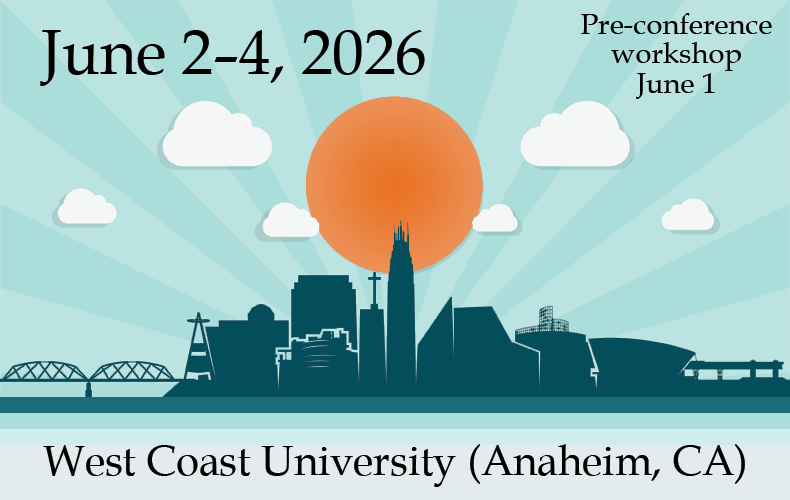
This year's theme is...
From Teacher-Centered to Learner-Centered
Education
This is a hybrid-format conference.
While in-person participation
is
encouraged
(because of the many advantages
of sharing time and space together,
even for avowed introverts),
that's not always possible or
practical. We'd love to see
you "there", however you choose
to attend!
There is a wide array of breakout
sessions:
-
Active Learning: From Coverage
to Competence
-
Assessment for Growth
-
Personalized Learning in
the Age of AI
-
Building Academic Cultures
for Student Success
-
Designing Quality Learning
Environments
-
Emerging Perspectives [Open
Track]
We also encourage
ALL educators
to
submit a proposal for a session,
even if only the Hall of Innovation
(poster session). The deadline
for proposals is March 15, so
there's still time!
Learn more here.
Registration is available for
both the conference
AND
the 1-day workshops:
-
Process Education Through
the Lens of Assessment:
A Five-Level Journey
(8:30am to 11:30am Pacific)
-
Fundamental Principles and
Practices of Team-Based
Learning
(12:15pm to 3:15pm Pacific)
|
|
|
|
Use this link:
https://bookstore.pcrest.com/discount/SPRINGCLEANING
and your 100% discount will
be automatically applied at
checkout.
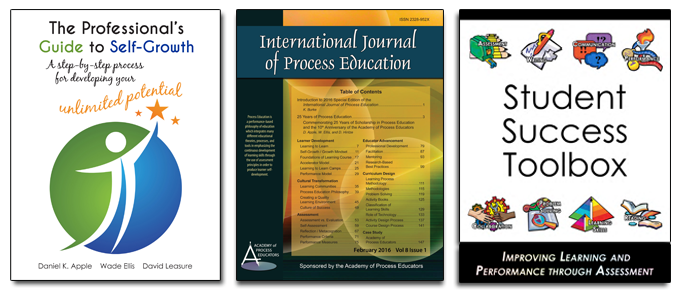
These two books and 1 special
edition of the
International Journal of Process
Education
are
FREE
to educators. You pay only shipping.
This is significant savings:
The
Student Success Toolbox
is regularly priced at $17.33
The Professional's Guide to
Self-Growth
usually costs $20.85
And the special edition of
the
IJPE
regularly runs $3.00
-
The
Student Success Toolbox
is the definitive collection
of tools that make increased
success possible for any
student. With the tools
(forms, rubrics, methodologies,
and profiles) to support
improved performance through
assessment, it will help
students with organization,
reading, writing, thinking,
communicating and collaborating.
More than 20 years in the
making, the Student Success
Toolbox is the definitive
collection of tools and
tips that make increased
success possible for any
student. With the tools
(forms, rubrics, methodologies,
and profiles) to support
improved performance through
assessment, it will help
your students be more organized
and better readers, writers,
thinkers, communicators,
and team players.
-
Choosing
The Professional's Guide
to Self-Growth
is to commit to living life
on your terms by developing
the characteristics of a
professional self-grower.
Self-growers take ownership
of their lives and their
learning. Self-growers develop
the characteristics of the
strongest professionals
and apply them equally well
to career, school, and life.
Over the last twenty-five
years as college-level educators,
we have helped tens of thousands
of professionals, both future
and current, apply the concepts
in this book. We realized
we could help more people,
faster, by writing a book
to help learners build these
skills themselves.
-
This special edition of
the
International Journal of
Process Education
(published in 2016) celebrates
10 years since the inception
of the Academy of Process
Educators and 25 years of
scholarship in Process Education.
The wealth of scholarship,
learning tools, and best
practices that has evolved
over this period is immense.
Many of the original Academy
members contributed to this
special edition of the IJPE,
helping to trace the evolution
of Process Education. The
content of the article falls
into five key areas: (1)
Learner Development, (2)
Cultural Transformation,
(3) Assessment, (4) Educator
Advancement, and (5) Curriculum
Design. The practices or
significant research that
advanced each are shared
within that area. These
practices and research are
presented chronologically.
so the development and connections
can be observed. A special
sixth area chronicles the
Academy of Process Educators
as a case study in a successful
professional learning community.
|
|
|
|
|
|
‘It’s just convenient for me’:
New Hinds Community College
program topples barriers to
higher education
Launched in January, the Learning
Circle is a series of evening
classes that also include nontraditional
options, such as child care
and dinner, to help make higher
education more accessible.
https://mississippitoday.org/2026/02/17/hinds-community-college-offers-child-care/
Landmark Ruling Blocks Ideological
Deportation Policy Targeting
Pro-Palestine Scholars
Emphasizing the case’s historic
significance, Judge Young concluded
unequivocally that noncitizens
lawfully present in the United
States enjoy the same free speech
rights as citizens: “This case—perhaps
the most important ever to fall
within the jurisdiction of this
district court—squarely presents
the issue whether non-citizens
lawfully present here in [the]
United States actually have
the same free speech rights
as the rest of us. The Court
answers this Constitutional
question unequivocally ‘yes,
they do.’
https://www.aaup.org/landmark-ruling-blocks-ideological-deportation-policy-targeting-pro-palestine-scholars
|
|
|
|
|
|