|
|
|
REFLECTIONS
Monthly News & Updates
|
|
|
|
Episode 7
Empowering the Life-Long Learner: Moving
Beyond "Just Doing"
|
|
|
For those of us dedicated to the craft
of teaching, we know that the most profound
growth occurs when we—and our students—stop
"sleepwalking" through routines and
start asking "why". In this episode
of our podcast, we dive deep into the
concept of metacognition, or "thinking
about our own thinking". When we step
back from the act of "just doing" to
examine how and why we perform certain
tasks, we fundamentally strengthen our
capacity for growth.
Our discussion centers on a transformative
framework: The Methodology for Generalizing
Knowledge (MGK). We often see students
struggle to apply what they have learned
in one week to a new challenge the next,
leading to the familiar refrain, "We've
never seen this before!". This happens
because knowledge remains "fragile"
when it is tied
to a single context. To counter this,
the MGK provides a nine-step pathway
to move from basic comprehension to
working expertise, where
knowledge can be transferred across
any context at will.
In this episode, you will hear:
-
The Parable of the Ham:
A cautionary tale about how easily
we inherit processes without understanding
their purpose.
-
The Buddha’s Boat:
An exploration of why generalizing
knowledge is superior to merely
transferring it—learning how to
build a boat for any river rather
than carrying the same boat with
you, just in case you need it again.
-
The 9-Step Journey:
A walkthrough of how to move learning
from familiar contexts to totally
unfamiliar ones. We use the practical
example of Perla, who applies these
steps to clothing repair to illustrate
how shifting from simple mending
to creative upcycling requires a
grasp of underlying principles.
-
The Power of Contextual Prompts:
Insights into why high-quality problem
solving depends on our ability to
discern the "prompts" in a new situation
that activate our existing knowledge.
As educators, our goal is to help learners
move from "thinking they know" to "knowing
they know" through rigorous metacognitive
checks and self-assessment. Tune in
to discover how you can use the MGK
to ensure that the knowledge you share
is never fragile, but is instead a versatile
tool your students can use to navigate
any "river" they may encounter.
|
|
Based on Chapter 13 of
Learn to Learn for Success
by Apple, Morgan, Hintze, & Woodbridge.
Created with the help of Notebook LM.
|
|
|
|
Capability Rising: Self-Growth
Community Explores a New Frontier
in Human Development
|
|
|
|
What
happens when you gather educators, professionals,
and self-growers to probe one of the
most transformative shifts in learning
today? You
get the January 6th Self-Growth Community
sessions—two powerful conversations
that delved into
Beyond Knowing: Why Capability Is the
New Currency of Human Development,
a white paper co-authored by Dan Apple
and David Leasure.
The white paper challenges long-standing
assumptions about education and personal
development, arguing that
access to knowledge is no longer enough.
In a world of instant AI responses and
overwhelming information,
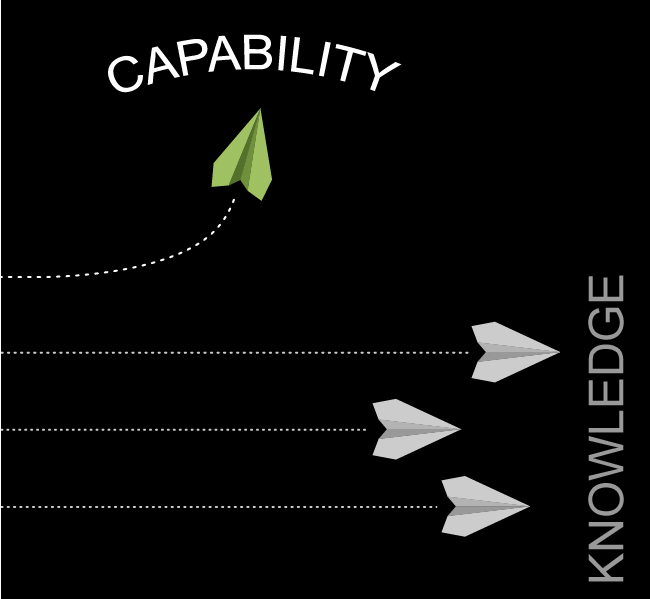
capability —the internal infrastructure
to reflect, perform, decide, realign,
and grow—has evolved to be the most
essential asset for thriving in complexity.
Across two sessions, participants wrestled
with key questions:
-
What exactly is the difference between
competence
and
capability?
-
How do we support faculty and learners
in building these internal skills?
-
What does capability-based development
look like in real classrooms, leadership
spaces, and coaching relationships?
In small group discussions, educators
shared strategies for making growth
visible and observable.
Others explored how capability development
might reshape assessment, instructional
design, and even how students are taught
to think about learning itself. Attention
was given to distinguishing between
capacity
and
capability—one
being fixed, the other developmental—and
how
self-awareness, wisdom, and risk-taking
play essential roles in real-world learning.
The takeaway?
We’re not preparing learners to “know
more.” We’re equipping them to “become
more.
And in doing so, we may be planting
the seeds for a full redesign of our
learning systems—from content delivery
to capability empowerment.
The Self-Growth Community continues
to be a proving ground for these ideas.
As the Academy of Process Educators
looks ahead to the 2026 conference,
capability-building will be an important
touchstone to integrate with the focus
on learner-centered teaching.
|
|
|
Self-Growth Tip:
Plan for Spontaneity
|
|
|
|
|
Balancing a necessarily rigid
(academic) calendar with personal
growth can be a challenge. While
much of our (academic) life
is scripted, some of our most
precious memories and lessons
come from unanticipated situations.
To intentionally increase your
quality of life, you can adopt
a strategy of "planning for
spontaneity".
|
|
|
|
The Catalyst: An Unexpected Guest
One of my New Year's Resolutions last
year was to do one new thing every day.
I had a list of new things planned and
used a calendar to schedule them. And
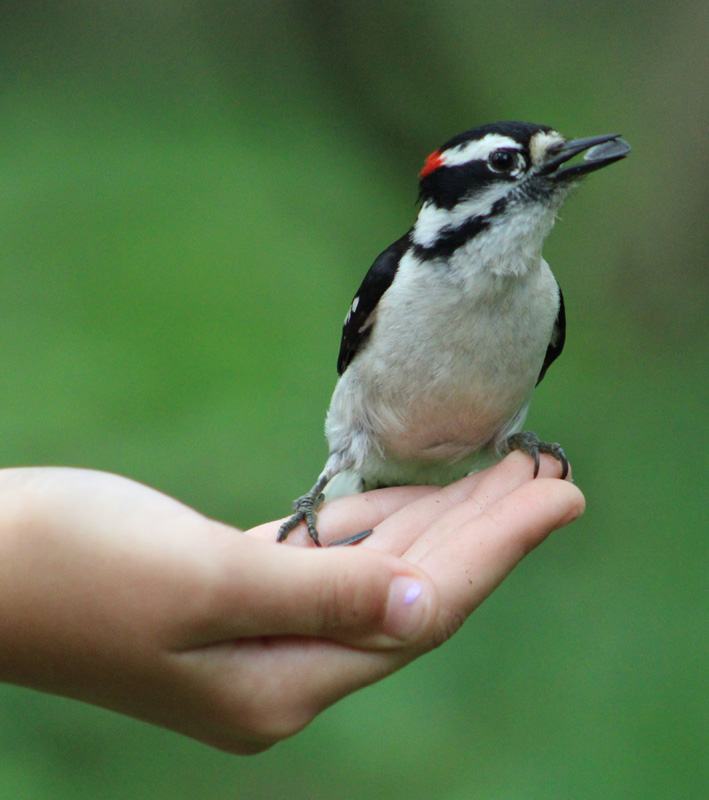
then one day, a woodpecker got inside
the house. It flew around panicked as
I tried, without success, to guide it
toward an open door. Finally, it just
landed on the floor and didn't move.
I carefully walked over to it and was
able to gently pick it up and cup it
in my hands, as I walked slowly to the
open door. When I got there, I held
it out and it flew away. That experience
was something I'll never forget: I had
never held a woodpecker in my hands,
nor had I ever even rescued one. It
was amazing and magical, and it blew
away whatever else it was I had planned
as the "new thing" for that day.
The Strategy: "Looking Up from the Map"
There is a major life lesson here: a
lot of incredible life experiences—and
opportunities for growth—cannot be planned.
They are often a confluence of factors
beyond our control, and we can choose
to be there for them, appreciating how
special they are.
Ready Yourself for the Unexpected
-
Acknowledge the limits of planning:
While much of your daily life is
planned, recognize that it is possible
to figure out how to be open to
the unexpected and fleeting moments
life hands you.
-
Look up from your "map":
Decide to let these unplanned moments
count as much as the moments you
have scripted or scheduled in your
calendar or syllabus.
-
Set your criteria:
Decide ahead of time that you are
willing to notice these moments,
let them happen, and fully inhabit
them when they arise.
To maintain this mindset, combine these
two bits of wisdom to stay ready for
what you didn't expect:
"Life is what happens while you're busy
making other plans."
— John Lennon
"Life comes at you fast...blink and
you may miss it."
— Ferris Bueller
Choosing to be present for these unanticipated
moments is a recipe for a better and
more magical quality of life.
|
|
|
Targeting a Learning Skill: Recognizing
Contradictions
|
|
|
(The complete listing of learning skills
is available at
www.processeducation.org/cls/web/)
This month's learning skill:
Recognizing Contradictions
identifying when results violate
fundamental principles or schemas
Where and how to TARGET it:
|
|
|
|
|
Teaching children to notice when something
"isn't quite right" helps them build
a strong logical foundation. While it
can be challenging, these strategies
make it enjoyable:
-
Model "The Logic Check":
Children learn by example, so when
you see something that doesn't make
sense (like a non-aquatic cartoon
character breathing underwater without
special gear), point it out. Say,
"Wait a minute! How are they breathing
air underwater?!”
-
Use Gestures: Create a "Contradiction
Cue".
You might blink your eyes rapidly
and open your eyes wide to signal
seeing something unbelievable. The
cue you choose should be fun to
use so your little one can enjoy
seeing it AND using it.
-
The "Something’s Wrong" Game:
Similar to "Simon Says," play a
game where you state facts and include
a "contradiction". For example,
"The sun is hot, the grass is green,
and ice is too hot to touch." The
child has to catch the contradiction
to win a point. Be sure to switch
roles so the child can try to stump
you!
-
Open-Ended "What Ifs":
Ask children what-if questions such
as, "What would happen if gravity
stopped working?" This pushes them
to engage thoughtfully with fundamental
principles and identify what would
happen if the rules we usually rely
on suddenly changed.
|
|
|
|
|
In the liberal arts, recognizing contradictions
often involves identifying internal
inconsistencies in texts, historical
accounts, or philosophical arguments.
-
The Anachronism Interview:
Have one student take on the persona
of a historical figure, such as
Emily Dickinson or Churchill. Other
students must interview them with
the specific goal of "catching"
the persona in a historical contradiction
or anachronism.
-
The Internal Consistency Debate:
Instead of a standard debate, hold
a moderated discussion where students
analyze a specific character or
author. The goal is to extract instances
where a character’s actions violate
their stated moral "schema" or principles.
-
Perspective Role Playing:
By taking on different personas,
students practice the empathy required
to see things from a different angle,
making it easier to spot when a
viewpoint contradicts itself.
|
|
|
|
|
In STEM settings, this skill is vital
for spotting data errors or "impossible"
results that violate the laws of nature.
-
"The Glitch" Collaboration:
As students work in teams to solve
problems, have them switch papers
to find "The Glitch"—a result that
violates a core principle like the
conservation of energy or a chemical
property.
-
Spot Modeling the Process:
When an experiment fails, the instructor
should intervene on the
process
rather than the
content.
Demonstrate how to "listen" to the
data to see where it contradicts
the hypothesis.
-
Clients and Specifications:
Play a game where the instructor
acts as a "client" asking for a
project that is physically or mathematically
impossible (e.g., a perpetual motion
machine). Students must use active
listening and their knowledge of
schemas to identify the contradiction
in the client's request.
|
|
|
|
|
Our personal lives offer many low-stakes
opportunities to practice identifying
when things don't add up.
-
The "Plot Hole" Watch Party:
Watch a film or TV program with
friends. Instead of just watching,
play a game to see who can catch
the most "plot holes"—instances
where a character’s actions violate
the established logic of the movie's
world.
-
The Skeptic’s Cinema:
Watch a sci-fi or fantasy film and
try to match the "movie science"
against real-world body language
or physical laws. Discuss which
perspectives and motivations in
the film feel authentic and which
feel like a contradiction of human
nature. You can have fun with discussions
by sharing information found online
from scientists’ critiques of how
films depict science.
-
Catch Your Own Bias:
When interacting with friends, catch
yourself when you find yourself
being judgmental or ignoring a contradiction
in your own logic. Work to understand
the underlying principle instead.
|
|
Got Resolutions? Self-Growth
is Your Superpower for Achieving
Them
|
|
|
|
We typically set New Years Resolutions
to help us improve ourselves in some
way.*
When we set them, we typically don’t
mean we just want to get better at performing
some task, but to fundamentally change
ourselves for the better. And that means
engaging in some self-growth!
Remember what being a self-grower means:
Self- growers are life-long learners
who are committed to success and show
it through hard work, persistence, and
belief in improving their capabilities.
They seek challenges to develop self-growth
such as taking risks to get outside
their comfort zone, embracing failures,
seeking feedback and using self-assessment.
They prepare, engage, and collaborate,
planning effectively and prioritizing
in order to manage their time and resources.
They develop and grow without limit
to realize their life vision and potential.
If you want to see yourself in that
description, then being a self-grower
has
to be the foundation for any other goals.
No matter what resolutions you’ve set
for yourself for this year, think about
them in light of being a self-grower.
Let's see how that would work:
Let's say you resolved
to work out regularly.
As a self-grower, you would go at it
from the perspectives of hard work,
persistence, and belief that you can
improve both at working out
and
at doing so consistently. You should
take risks, step outside your comfort
zone (but stretch first!), and embrace
any failures as an opportunity to change
your thinking or adjust your approach.
Prepare, engage, and collaborate—work
out with a friend!
Not only will this strategy of using
"self-grower thinking" put you firmly
on the path of making a better YOU,
it will give you a variety of tools
to help you meet (almost*)
any resolution you set.
|
|
|
*I
have a friend who has resolved to eat
chocolate every day in 2026 because
it makes him happy and the world in
general is making him sad. I laughed
when he shared his resolution but now
I think he might be onto something.
While the chocolate aspect might be
amusing—he assures me it’s not and that
chocolate is "a very serious matter"—the
point is that he has committed to taking
better care of his mental health. I'm
proud of him. And slightly envious!
|
|
|
|
Coaches and Consultants can
use PC Professional Development
Workbooks to facilitate their
own workshops. Our custom GPTs
can help us contextualize the
activities you choose, so they
apply to your clients.
Possible topics include
Assessment,
Change Projects,
Leadership,
Mentoring,
Problem Solving,
Research,
Teaching,
Self-Growth,
Strategic Planning,
etc.
View our Professional Development
Catalog to see the handbooks
we have to offer:
www.pcrest.com/PC/resources/FDcatalog26-27a.pdf
Want to know more?
Let’s talk!
|
|
|
|
|
|
Future-Ready: 2026 Trends That
Point to Growth, Access, and
Innovation in Higher Ed
Across multiple credible sources
(Tyton Partners, Inside Higher
Ed), positive trends are emerging
as higher education adapts to
the future:
-
Expanded alternate credentials,
apprenticeships, and accelerated
pathways are gaining momentum
— offering more flexibility
and real-world alignment
for students. 7
Higher Education Trends
to Look Out For in 2026
-
Dual-enrollment programs
saw notable growth, helping
high-school students earn
college credits and boosting
access.
-
2026 predictions emphasize
student success, personalized
learning, and ethical AI
integration to support instruction,
advising, and operations.
“Celebrating Universities That
Go Beyond the Classroom”
Several U.S. Universities —
including Texas Southern University
(TSU), University of Houston
(UH), University of Houston-Downtown,
and Sam Houston State University
— received the prestigious Carnegie
Community Engagement Classification
in early 2026. This national
honor recognizes institutions
that excel in partnerships with
local communities through research,
teaching, and service. TSU made
history as the first historically
Black university in Texas to
earn this classification.
TSU becomes first Texas HBCU
to earn Carnegie community engagement
designation
More students are going to college.
Affordability and workforce
training are factors (NPR)
www.npr.org/2026/01/15/nx-s1-5676186/college-enrollment-increases-in-2025
|
|
|
|
|
|
How Big Tech killed literary
culture
“The rise of generative artificial
intelligence, as both a practical
technology and a popular obsession,
crystallises Big Tech’s cultural
takeover. AI turns reading and
writing into automated industrial
routines, optimised for speed
and efficiency.
It instrumentalises intellect,
allows the critical and creative
work of the mind to be outsourced
to machinery. The public, whatever
fears it may have about the
ultimate consequences of the
technology, seems happy to employ
it in myriad ways to save time
and money.”
https://unherd.com/2026/01/how-big-tech-killed-literary-culture/
|
|
|
|
FREE Webinar Series
Trump and Higher Ed: Understanding the
Latest
(from the Chronicle of Higher Education)
Sign up for free today and
you’ll automatically be registered for
all three new dates, taking place once
a month January, February, and March.
Sarah
Brown, The
Chronicle’s
news editor, and Rick Seltzer, author
of
the subscriber-only Daily Briefing newsletter,
will tackle the most pressing issues
in higher-ed policy,
helping you stay informed and prepared
for what’s ahead.
-
Session 1: January 21 at 1
p.m. ET / 10 a.m. PT
-
Session 2: February 19 at 1
p.m. ET / 10 a.m. PT
-
Session 3 (Audience Q&A): March
26 at 1 p.m. ET / 10 a.m. PT
|
|
|
|
|