|
|
|
REFLECTIONS
Monthly News & Updates
|
|
|
|
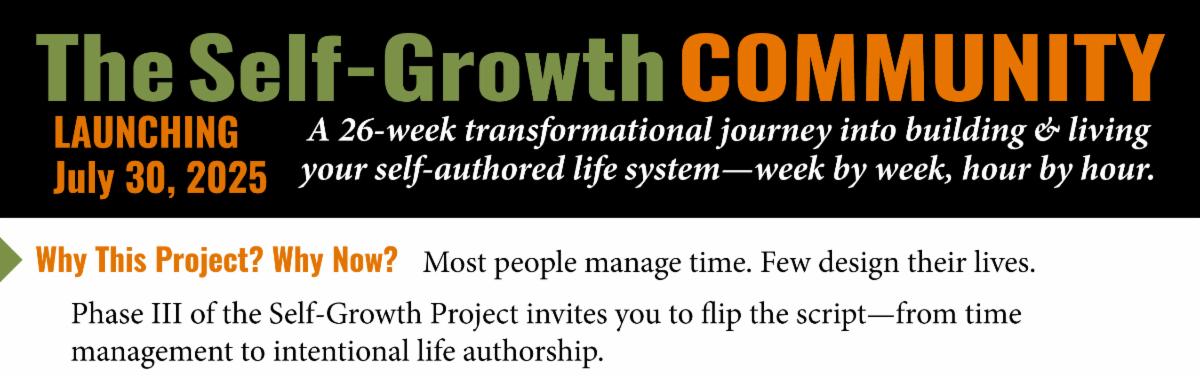
The self-growth community kick-off session
will be
July 30 at 4:00 PM ET and again
at 7:00 PM ET to
accommodate different schedules as well
as time zones. Each session will
last 60 minutes. Interested parties
should contact
Steve Beyerlein
for ZOOM information.
|
|
|
A Sneak Peek at the first 3 weeks of
the “26-Week Plan for Your Self-Growth
Journey”
The first three weeks are all about
preparation and integrating what you
learned at the Self-Growth Institute.
Here’s a week-by-week breakdown for
those weeks:
Week 1: Initiation & Orientation
Any journey begins with a strong plan
and real preparation. During this week
you’ll be introduced to your self-growth
coach and become familiar with the
scope, vision, and commitment expected
throughout the 26 weeks of our journey
together. Key goals include establishing
psychological safety within the group,
building rapport among participants,
and introducing core concepts of self-growth.
Exercises focus on intention-setting,
outlining your personal reasons for
joining, and co-creating shared community
values. Critical reading includes the
first 30 pages of the
168 Hour Solution
(Preface – Chapter 3), as it provides
insight into the value of intentional
living through designing a 168-hour
week as a cornerstone of your self-growth
journey.
Week 2: Clarifying the Life Vision and
the Vision of Horizon Self
This pivotal week invites deep introspection
and structured envisioning of your desired
future way of living and being. You’ll
craft a one-page Life Vision narrative
that captures your most inspired self
by articulating what it means to live
an inspired life as supported by five
Growth Goals aligned with your self-growth
journey. You will identify long-term
Life Goals and compile a 3-page Strategic
Life Plan to serve as a roadmap. Additionally,
Measures of Success are defined to track
transformation and impact over the six
months. These outputs are intended to
connect aspirations with actionable
intentions. Many achieve this during
the Self-Growth Institute since they
are critical planned outcomes of the
Institute.
Week 3: Establishing Weekly Practice
This week is dedicated to understanding
the Growth Cycle using a structured
engagement. You’ll explore and implement
weekly transition practices through
the use of GPT tools such as the Weekly
Reflector (generate 5 key observations),
the Truth Seeker (inner voice reflection
on some of these observations), Insight
Generator Pro (5 insights from revised
observations), Weekly Growth Coach Pro
(growth plans from insights for up to
5 growth opportunities), Weekly Scripter
(crafting 168-hour living plan that
identifies the week’s activities), and
the Activity Designer (take 1 or 2 of
these planned activities to create additional
scripts for key activities of the week).
This builds metacognitive awareness
and establishes rituals for sustaining
intentional growth aligned with your
Life Vision and Horizon Self. This weekly
1-hour transition, used for the rest
of the project, is the central focus
of your self-growth journey.
|
|
|
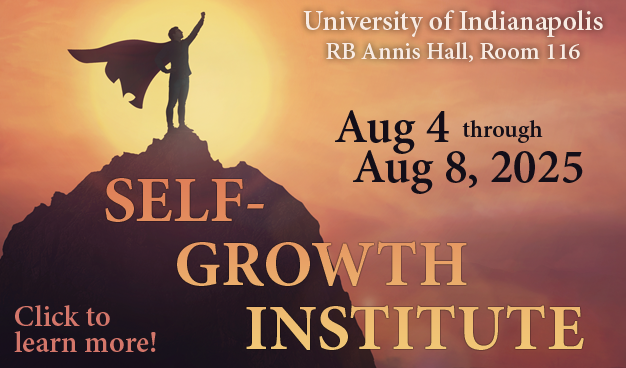
The Self-Growth Institute | August 4–8,
2025
University
of Indianapolis | RB Annis Hall, Room
116
8:30
AM – 10:00 PM Daily (Lunches and snacks
provided)
Dinner
Break: 5:00–7:00 PM
There's still time!
Cost & Commitment
-
Tuition:
$1,500
-
Discounted
Rate: $500 (for Phase III Self-Growth
Project participants)
-
University
of Indianapolis Faculty/Staff: Fully
funded by the university
|
|
|
Announcing
Listening to Learn
A New Podcast from Pacific Crest
|
|
|
We believe
that fostering
authentic, student-centered learning
is an ongoing process of discovery.
It requires us to listen deeply—to our
students, to our colleagues, and to
the principles that guide effective
educational practices.
To deepen
this conversation, we are thrilled to
announce the launch of our new monthly
podcast,
Listening to Learn.
|
|
|
|
Each
month, we will explore a different facet
of Process Education, translating its
powerful principles into practical strategies
for your classroom, institution, and
self! From fostering self-growth and
metacognition to designing quality learning
experiences, we will do our very best
to provide you with fresh perspectives
and insights you can put to work increasing
student success.
Beginning
in August, you'll have the opportunity
to subscribe to
Listening to Learn
and find
us on Spotify. We'll keep you posted!
For now, we invite you to listen to
our first episode for FREE
(the change under your sofa cushions
is safe!).
|
|
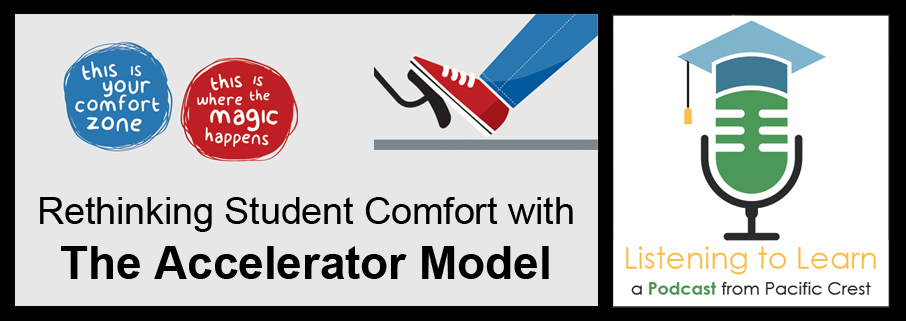
Episode 1
Rethinking Comfort with The Accelerator
Model
(FREE!)
|
|
|
How often have we heard that students
need to feel comfortable to learn? Our
inaugural episode confronts this very
idea.
In
Rethinking Comfort with The Accelerator
Model,
we tackle one of the founding principles
of Process Education, exploring the
powerful idea that true growth often
happens just
outside
the boundaries of our comfort zones.
Join us as we discuss:
-
The problem of intellectual comfort
-
How "productive struggle" can be
a catalyst for deeper engagement
and ownership of learning
-
Strategies for creating a challenging
yet supportive environment where
students are empowered to take risks
and achieve more than they thought
possible
This episode is for
any
educator who wants to move beyond passive
information delivery and cultivate a
dynamic environment that holds the promise
of transforming not just student learning,
but your own teaching.
You'll be able to Join the Conversation!
We believe the best ideas are shared.
We invite you to listen to the first
episode for free now and stay tuned
for the opportunity to subscribe for
subsequent episodes.
We look forward to embarking on this
journey of listening and learning with
you!
|
|
We are pleased to be able to offer
our own 100% original content
to you in this new format, generated
by Google Notebo6ok LM. We check each
episode multiple times for both accuracy
and quality.
|
|
Ongoing Series:
The Learning
Process Methodology
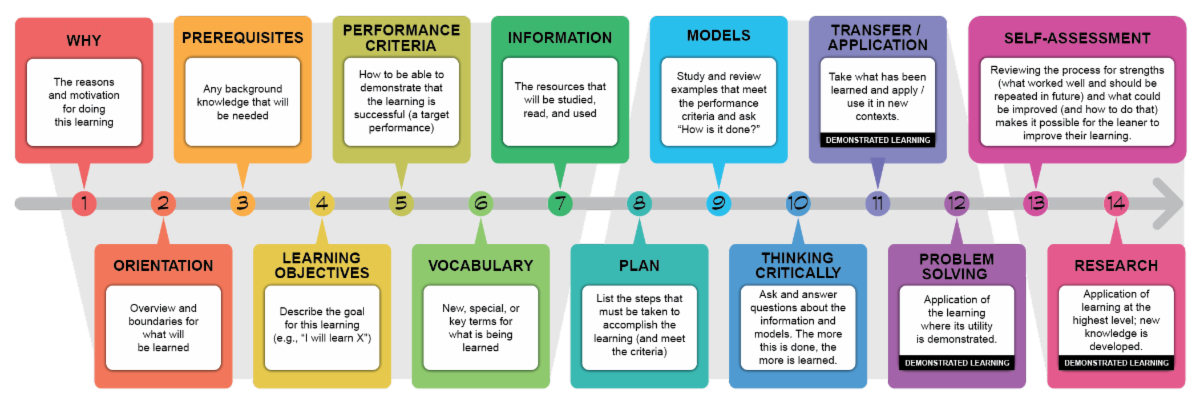
How to Learn in 14 Steps
|
|
|
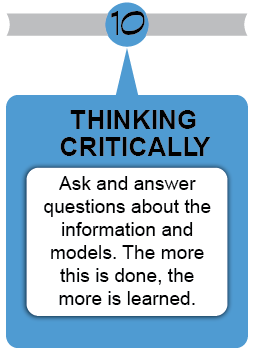
The tenth step is of the LPM is
Thinking Critically
Critical thinking is the driving skill
with which learners manage not just
their intelligence, but their understanding.
The Learning Process Methodology means
that Learning activities should be built
and used in ways that elevate the learner's
use of critical thinking.
|
|
|
|
There
is an intimate relationship between
knowledge and thinking. Knowing that
something is so is not simply a result
of believing that it is so; knowledge
is justified belief. There are standards
for the assessment of thinking. Critical
thinking supports the creation of new
knowledge, or improved quality of knowledge,
in any field or application (Paul, 2003).
It has been observed that
“Many highly intelligent people are
bad thinkers. Intelligence is like the
horsepower of a car. A powerful car
has the potential to drive at any speed.
But you can have a powerful car and
drive it badly”
(de Bono, 1995).
Critical Thinking and Questioning
Critical thinking
also can be thought of as a process
for actively exploring situations by
asking relevant questions in order to
decide what to believe or what to do.
In this context,
critical thinking
means thinking analytically.
“In fact, the ability to ask appropriate
and penetrating questions is one of
the most powerful thinking tools you
possess, although many people do not
make full use of it. Active learners
explore the learning situations they
are involved in with questions that
enable them to understand the material
or task at hand, and then integrate
this new understanding into their knowledge
framework.
|
|
|
In
contrast,
passive learners rarely ask questions.
Instead, they try to absorb information
like sponges, memorizing what is expected
and then regurgitating what they memorized
on tests and quizzes.”
(Chaffee, 2004)
|
|
|
|
Learning
is promoted by asking questions that
challenge students’ understanding at
the appropriate level (Brookfield, 1987).
Well-crafted and strong questions can
also stimulate students’ curiosity and
allow the teacher to probe current understanding
(Eggen & Kauchak, 1988).
Inquiry
as a learning method requires active
participation both by the students and
teachers and a hierarchy of critical
thinking questions correlate with the
Levels of Learner Knowledge (Barton,
1997; Bobrowski, 2007).
This
is useful information for classroom
application, as there are questions
most appropriate to ask students at
each level of learning and student proficiency
with those questions demonstrates understanding
at that level of learner knowledge.
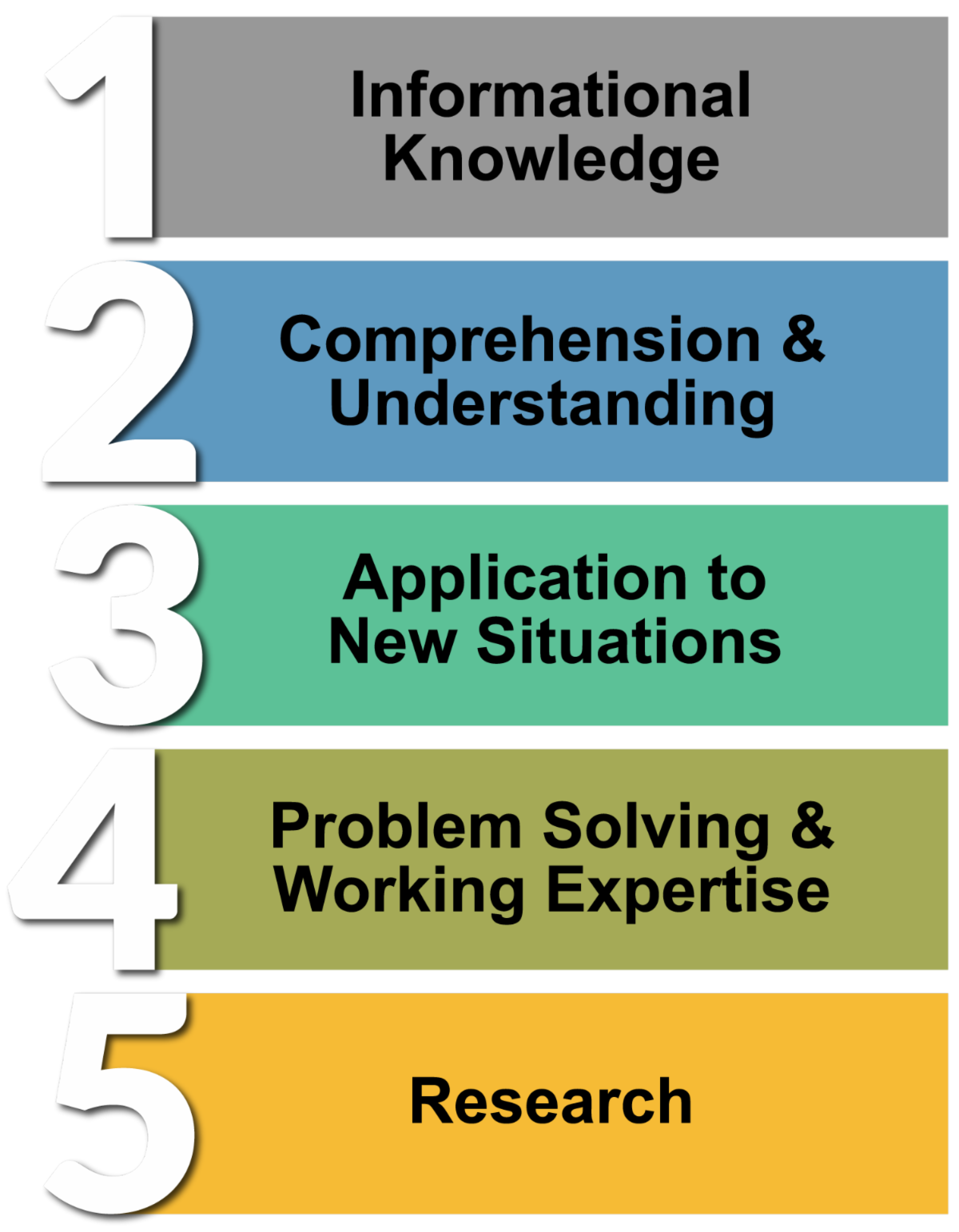
Levels of Learner Knowledge
-
Level 1, Informational Knowledge:
You can talk about a concept, process,
tool, or context in words and can
provide definitions or descriptions;
you are best with questions about
facts.
-
Level 2, Comprehension & Understanding:
You can construct appropriate meaning
pertaining to a particular item
of knowledge. You also can link
items of knowledge to each other
and can teach this knowledge to
someone else.
-
Level 3, Application to New Situations:
You can apply and transfer knowledge
to new situations and contexts.
You can generalize knowledge to
determine ways to apply it, testing
boundaries and linkages to other
information.
-
Level 4, Problem Solving & Working
Expertise:
You can solve complex problems by
applying and generalizing multiple
concepts, processes, and tools to
produce a quality problem solution.
You are seen as an expert in your
field.
-
Level 5, Research:
You have innovative expertise which
can be used to develop new understanding
and know how to validate and test
your assumptions and hypotheses
to build reliability. You can share
your understanding as common knowledge.
Again,
there are typical questions that we
see and use for each of the Levels of
Learner Knowledge.
We can
also use questions from a higher level
to challenge learners and help them
increase the level of their knowledge.
|
|
|
A learner at Level
2: Conceptual Understanding, is able
to answer questions that begin with
phrases such as...
-
How
would you compare...?
-
How
would you contrast...?
-
How
would you describe...?
Learners
who are at Level 1: Informational Knowledge
find these questions challenging. With
careful facilitation, these questions
help them
increase
their
level of knowledge towards Level 2.
|
|
|
|
Sequencing of Questions
Critical thinking questions should be
placed in an order that is logical.
This means that they should be sequenced
from lower- to higher-level questions,
according to the Levels of Learner Knowledge.
In a process-oriented classroom, student
teams usually work at different rates,
and there can be a large variance in
the amount of time required to complete
an activity. Thoughtful use of critical
thinking questions can lessen these
differences and make it easier for faculty
to manage classroom learning. Placing
directed questions first help prevent
learners or teams from going off on
tangents. And a
divergent question
at the end acts as an “equalizer” for
faster learners/teams who reach this
question well ahead of others and can
therefore dig deeper and do more in
answering this question.
Beyond the questions being sequenced
logically, they should also be:
-
Relevant:
help students meet performance criteria
for activity
-
Growth-Oriented:
promote growth for learners at multiple
levels of development
How Many Questions?
A good rule of thumb for guided-inquiry
activities is to require learners to
answer between 6 and 10 critical thinking
questions, broken down and ordered as
follows (Hanson, 2006):
-
2-3 directed questions
-
3-6 convergent questions
-
1 divergent question
|
|
|
Question Types
Directed questions
focus on
Level 1 knowledge
and point learners to the information
they need in order to start a learning
activity. Such questions often begin
with
who,
what,
when,
where,
and
which,
have a definite answer, and build the
foundation for more challenging questions.
Directed questions should be:
|
|
|
-
Preparatory:
measure readiness for the learning
activity
-
Exploratory:
require the learner to use the resources
needed for the activity (e.g., the
model, reading, lectures, and real-life
experiences).
-
Accessible:
motivate learners through initial
success
-
Foundational:
deconstruct misconceptions and build
infrastructure for future learning
With these questions learners
identify, find, choose, define, list,
label, show, spell, match name, tell,
recall, select, organize,
and
outline
|
|
|
Convergent Questions
These questions build
Level 2 knowledge
(understanding of concepts) and help
students elevate their knowledge to
Level 3 (application). They help learners
learn to solve problems and require
learners to organize, interpret, analyze,
and synthesize. They may have more than
one correct answer, and the level of
difficulty progresses within a sequence
of questions.
|
|
|
|
A good convergent question makes important
connections, links concepts, increases
understanding, and requires that learners
reach conclusions.
Convergent questions should be:
-
Challenging:
answers are not directly available
in the resources (e.g., in the model,
readings, lectures, and real-life
experiences)
-
Integrative:
make links between key information
in the resources
-
Rich:
allow for more than one correct
answer or approach
With these questions learners
relate, compare, contrast, explain how,
illustrate, translate, infer, demonstrate,
summarize, interpret, show, explain,
classify, select, rephrase, reason why,
apply, construct, make use of, plan,
build, develop, model, interview, experiment
with,
and
identify
|
|
|
Divergent Questions
Divergent questions
send learners in new and interesting
directions. They may have no right or
wrong answer, but require exploration,
generalizing, and expansion of current
knowledge. Divergent questions require
the highest level of thinking and produce
outcomes and conclusions that vary among
learning teams and individuals. They
almost always deal with knowledge at
Level 3 (application),
4 (problem solving),
or
5 (research).
|
|
|
|
Divergent questions should be:
-
Open-ended:
encourage learners to travel down
different paths of inquiry
-
Difficult:
require the learner to go beyond
the performance criteria for the
activity
-
Validating:
motivate learners to test and generalize
boundary conditions
-
Deep:
are possible research questions
With these questions learners
apply, construct, make use of, plan,
build, develop, model, interview, experiment
with, identify, analyze, dissect, inspect,
model relationships, divide, simplify,
solve, test for, connect functions,
make and test assumptions, examine,
apply a design, create themes,
and
improve
They may even
theorize, design, formulate, discover,
make up, hypothesize, prove, disprove,
invent,
or
create an original work
in responding to divergent questions!
|
|
|
A Look at Critical Thinking Questions
in Context
Take a few minutes and enjoy the following
story. Read carefully,
especially
if you think you already know the story!
|
|
|
|
|
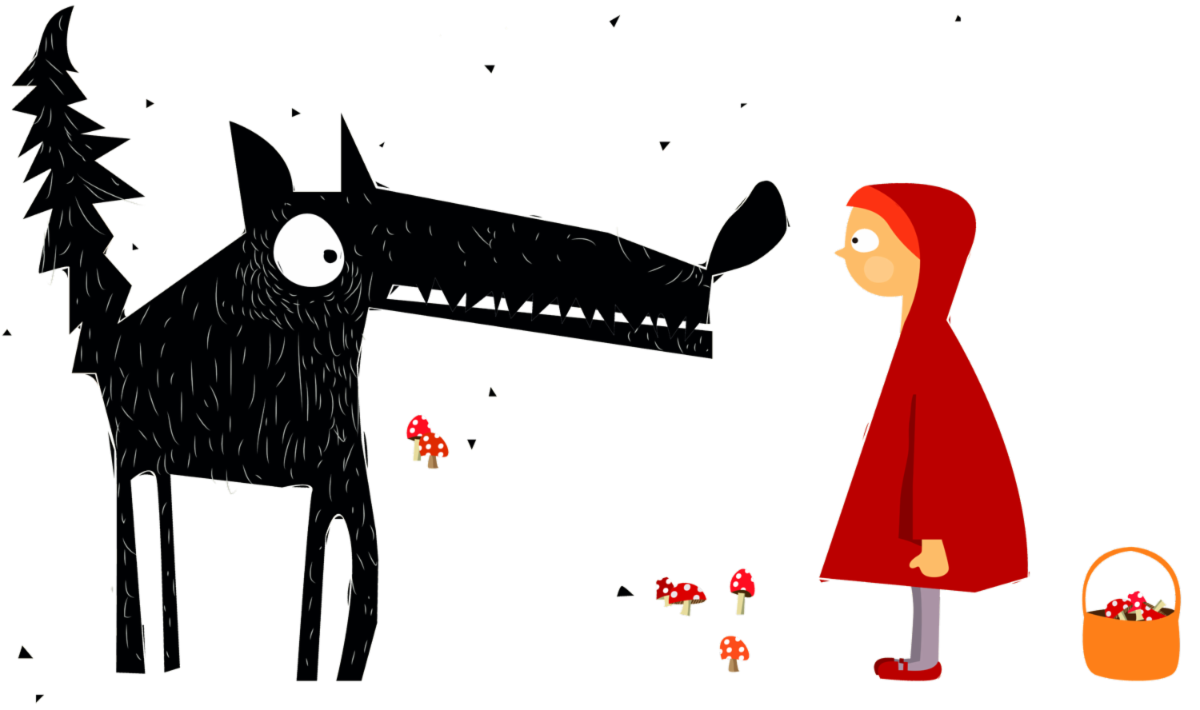
Little Red Riding Hood lived in the
woods with her mother. One day her mother
sent her to visit her grandmother with
a loaf of bread. On her way, she stopped
to pick mushrooms and met a wolf.
|
|
|
"Hello!"
said the wolf. "Where are you going?"
"I’m going to see my grandmother. She
lives in a house behind those trees",
said Little Red Riding Hood.
The wolf ran off to Granny’s house and
ate her. He put on Granny's nightgown
and nightcap and got into Granny’s bed.
A bit later, Little Red Riding Hood
reached the house. She looked at the
figure lying in the bed.
"Gosh, Granny, what big eyes you have!"
"All the better to see you with!" said
the wolf.
"But Granny, what big ears you have
now!"
"All the better to hear you with!" said
the wolf.
"Granny, what a big nose you have!"
"All the better to smell you with!"
said the wolf.
"Granny, what big teeth you have!"
"All
the better to eat you with!" shouted
the wolf.
The wolf leapt out of the bed and Little
Red Riding Hood screamed.
A woodcutter was nearby in the woods.
He heard Little Red Riding Hood's scream
and ran to the house. The woodcutter
hit the wolf over the head. The wolf
opened his mouth wide in a shout and
out jumped Granny, unharmed but slighly
damp. The wolf ran away and Little Red
Riding Hood never saw the wolf again.
THE END
|
|
And now, some Critical Thinking Questions...
(Remember, their purpose isn't to
gauge
learning but to
guide
and
increase
it!)
Directed Questions
-
Who was Little Red Riding Hood (LRRH)
going to visit?
-
Where did Little Red Riding Hood
live?
-
What was she picking when she met
the Wolf?
Answers
-
Who was Little Red Riding Hood going
to visit?
her grandmother
-
Where did Little Red Riding Hood
live?
in the woods with her mother
-
What was she picking when she met
the Wolf?
mushrooms
Notice that there are right and wrong
answers for these first three questions
because they are directed. These questions
could easily be turned into True/False,
fill-in-the-blanks, or multiple choice
questions without any problem. A simple
answer key will cover the right answers
to these questions.
|
|
Convergent Questions
-
How was the grandmother saved?
-
What happened after LRRH told the
wolf where she was going?
Answers
-
How was the grandmother saved?
The woodsman made the wolf open its
mouth, allowing the grandmother, who
was eaten whole, to jump out of the
wolf.
There are also correct and incorrect
answers for the convergent questions,
but learners can phrase or explain their
answers in a variety of ways. They can
provide more or less information and
be more or less specific in their answers.
To decide what makes a "correct" answer
to one of these questions, you first
need to come up with
criteria
for a strong answer.
For the first question, some criteria
might be that the response should...
-
identify the role of the woodsman
-
confront or address the fact that
the story says that granny was eaten
(people who are eaten by wolves
don't usually do anything more than
get digested)
This is because, technically speaking,"through
intervention by another character"
is a correct answer to this question.
This is part of the challenge of writing
good CTQs; the question needs to be
specific enough that this kind of "technically
correct" answer is not possible. A better
phrasing of the question might be,
"What was the sequence of events that
saved granny?"
Another answer
-
What happened after Little Red Riding
Hood told the wolf where she was
going?
The wolf used the information Little
Red Riding Hood (LRRH) gave him to get
to granny's house first. This led to
one meal in the form of granny and a
planned second in the form of LRRH.
Think about it: Is there a better way
to phrase this question that might avoid
the "technically correct" answer "the
wolf immediately ran away"?
Try to think of one!
|
|
Divergent Questions
-
If you knew this story was written
several hundred years ago, what
does it tell you about the world
view at the time of writing?
-
The wolf is able to speak in this
story. What are some of the implications
of the wolf as a metaphor rather
than an actual wolf?
Answers
It is generally agreed that the story
of LRRH illustrates the contrast between
the safe world of a village and the
dangers of the forest. The forest is
also often seen as a place of magic;
in fairy tales, the forest is where
animals can talk and things like unicorns
and dragons exist. The story also warns
about the dangers of not obeying one's
mother. LRRH makes the mistake of speaking
to a stranger (the wolf) and gives him
information that puts granny and herself
in danger. Predators can seem friendly
and even familiar; consider that LRRH
doesn't immediate realize that it is
the wolf in granny's bed. The story
also makes or demonstrates assumptions
about the world being a dangerous place
for females (old or young) and that
they are unable to protect themselves
and must be saved by a strong and armed
man.
These are
interesting
questions that give learners the opportunity
to explore more advanced and research-oriented
ideas. There really are no correct answers
to these kinds of questions; simply
more and less complete or on-target
answers. There is no answer key for
these kinds of questions other than
a description of the criteria that a
strong answer should meet. The information
provided here by way of response is
just an outline; entire books have been
written about the wolf as metaphor and
the world view that such fairy tales
demonstrate!
A Final Word about CTQs
No matter how inspired you might be
when you compose critical thinking questions,
no matter how pleased with the results,
you will always benefit from taking
time to review, refine, and re-sequence
your questions and have them reviewed
by a student and a colleague.
You should also be aware of the message
that the "white/blank space" following
each question communicates about your
expectations for a response. Providing
less space for an answer encourages
learners to work quickly toward more
simple and short answers. More space
encourages justification, discussion,
and debate.
References
-
Barton, L. G. (1997).
Quick flip questions for critical
thinking.
San Clemente, CA: Edupress.
-
Bobrowski, P. E. (2007). Bloom's
Taxonomy—Expanding its Meaning.
In S. W. Beyerlein, C. Holmes, &
D. K. Apple (Eds.),
Faculty guidebook: A comprehensive
tool for improving faculty performance
(4th ed.). Pacific Crest.
-
Brookfield, S. (1987).
Developing critical thinkers: Challenging
adults to explore alternative ways
of thinking and acting.
San Francisco: Jossey-Bass.
-
Chaffee, J. (2004).
Thinking critically.
Boston: Houghton-Mifflin.
-
de Bono, E. (1995).
Mind power.
New York: Dorling Kindersley.
-
Eggen, P., & Kauchak, D. (1988).
Strategies for teachers.
Englewood Cliffs, NJ: Prentice-Hall.
-
Hanson, D. (2007). Writing Critical
Thinking Questions. In S. W. Beyerlein,
C. Holmes, & D. K. Apple (Eds.),
Faculty guidebook: A comprehensive
tool for improving faculty performance
(4th ed.). Lisle, IL: Pacific Crest.
-
Paul, R. (2003).
Draft statement of principles.
National Council for Excellence
in Critical Thinking.
Retrieved May 28, 2004.
|
|
| | |