|
(Phase I and Phase II participant reflection
by Steve Beyerlein)
Join us to explore and increase your
own growth.
STARTING POINT
Though
I brought decades of experience in coaching
and mentoring, I soon realized the primary
aim of the Self-Growth Project was not
about guiding others—but about courageously
turning inward. Phases I and II encouraged
me to examine the gap between my current
self and my Ideal Self and intentionally
move toward a better next self—my Horizon
Self.
Leading
up to the Self-Growth Project, I had
spent several years drafting and redrafting
retirement goals. These captured desired
qualities across life roles, but I lacked
clarity on how to meaningfully pursue
them. I kept thinking: “If only I could
be more stoic or more diligent.” But
that approach wasn’t appealing—it was
easy to delay action until tomorrow,
next week, or next year.
MINDSET SHIFT
The Self-Growth
Project helped me tackle the challenge
of designing life just one week at a
time. What made it transformational
was realizing it wasn’t about piling
on tasks or forcing change. It was about
adopting naturalistic practices that
helped me live more authentically and
intentionally.
A key
turning point came when I stopped treating
tools as tasks—and began using them
to truly listen to my life.
TRANSFORMATION IN DAILY PRACTICE
In my
35 years as a faculty member, journaling
was irregular and project-driven. Through
the Self-Growth Project, journaling
became a source of serenity. Using prompts
grounded in Naikan philosophy, I recorded
not just what I did—but how my actions
aligned with my values and intentions.
My inner
critic gave way to a voice of gratitude
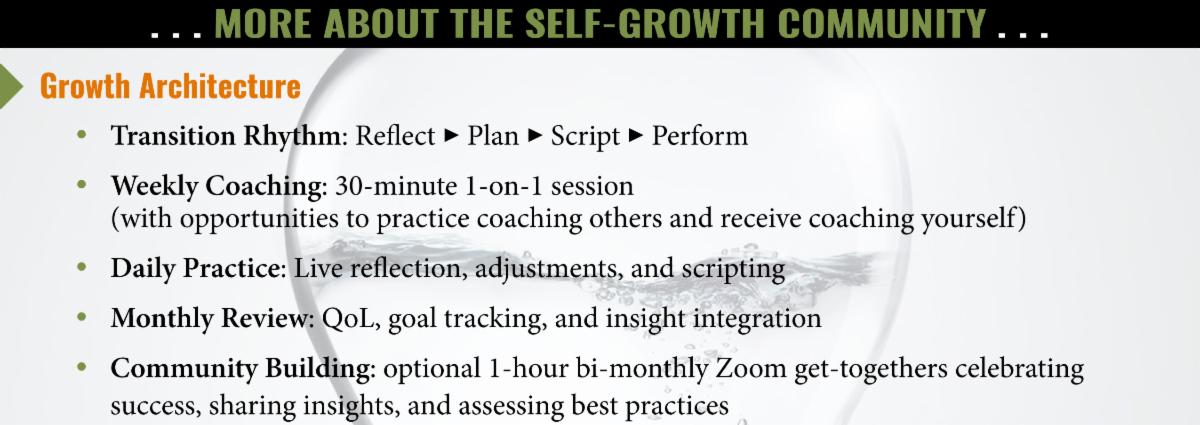
and discernment. Community AI tools
like the Insight Generator and Assessment
Mentor brought clarity I didn’t know
I was missing.
LIVING MY HORIZON SELF
My desire
to be a growth coach for my grandchildren,
a lay apostle in my community, and a
mentoring partner to colleagues is no
longer a distant ideal. It’s a consciousness
I now inhabit—in reflection, family
planning, coaching, and energizing fitness
as well as wellness routines.
My weekly
growth plans—once tactical checklists—now
integrate spiritual, physical, and emotional
intentions. These aren’t just calendar
items to mark off. They’re invitations
to practice becoming.
OBSTACLES
The journey
hasn’t been without challenges—fear
of failure, perfectionism, and reluctance
to assert myself. But each week, I’ve
found more courage to act with intuition,
risk disapproval, and bring my full
self into the moment. Reflection is
no longer just retrospective—it’s more
of a real-time performance practice.
BIGGEST BREAKTHROUGH
One of
my deepest shifts came in how I engaged
with discomfort—especially around aging,
faith, and my role as a spouse. What
once felt like emotional exposure now
feels like spiritual presence. Daily
check-ins based on feelings and perceptions,
not self-righteousness, has become a
channel for staying emotionally engaged
(even when it hurts) and offering presence
(without the urge to fix prematurely).
INSIGHT TO CARRY FORWARD
If I
had to offer one insight to others:
the practices that changed me weren’t
flashy. They were right-sized and often
imperfect—but they were aligned. That
alignment has spawned celebrated progress
rather than regret. It has amplified
my joy, deepened my relationships, and
broadened my impact.
VISION FOR WHAT’S NEXT
As we
launch Phase III, I’m not primarily
aiming for more growth. I’m aiming for
deeper presence. I want to become the
kind of person whose legacy is lived
day by day—not written after the fact.
I believe
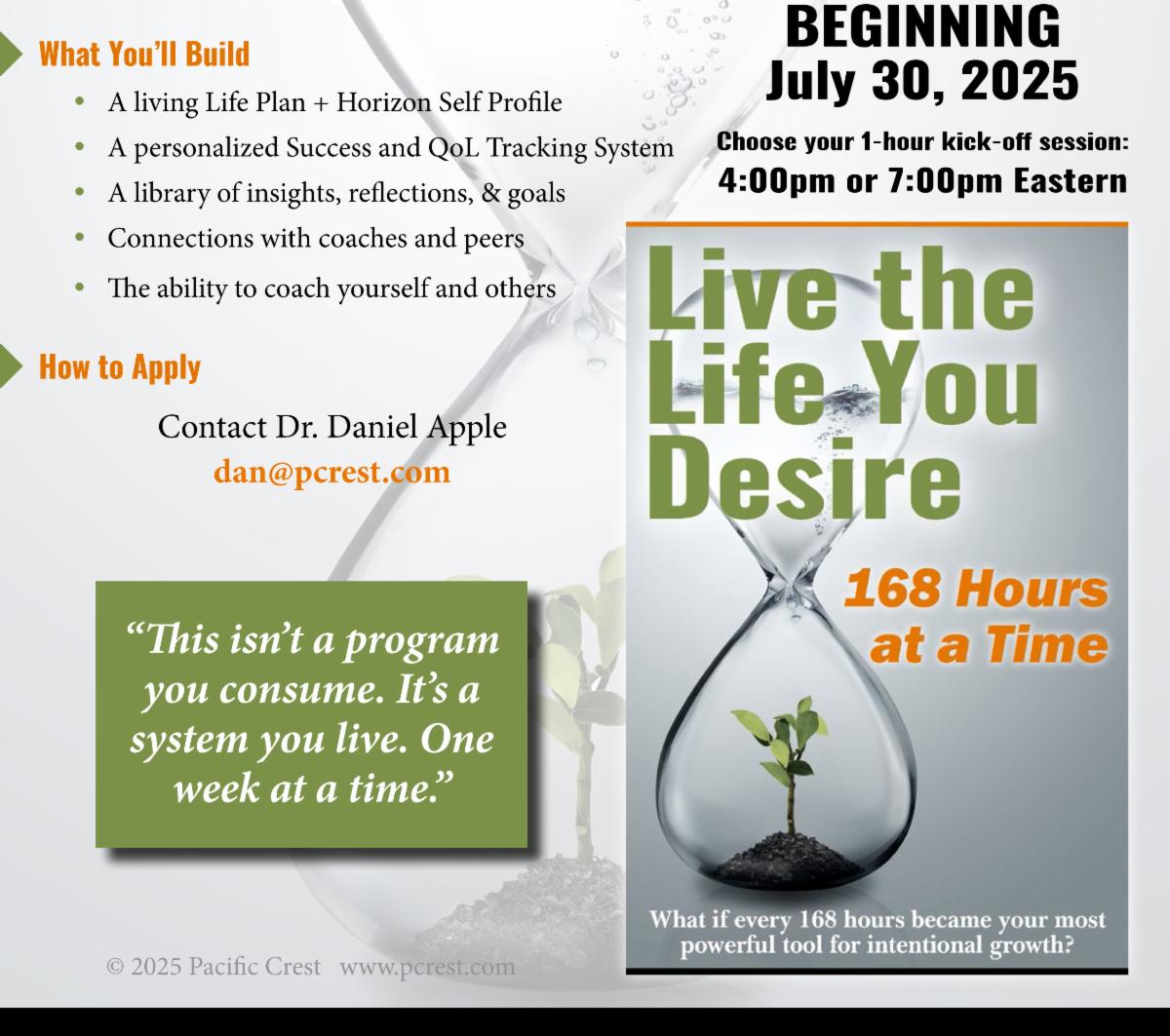
Phase III offers us a chance to build
a community of practitioners—where trusted
spaces invite us to share our experience,
strength, and hope not just occasionally,
but rhythmically and organically.
|