|
|
|
REFLECTIONS
Monthly News & Updates
|
|
|
|
|
This month's columns include:
-
Series: The Learning Process Methodology
-
Step 6: Vocabulary
-
Vocabulary in the
Student Success Toolbox
-
New Word Alert!
-
Get the
Faculty Guidebook
-
Something to Think About:
Education either functions as...
-
Monthly Self-Growth Tip: Persistence
vs. Moving On
-
Learn to Learn for Success course
starting up in early May
-
Process Education Conference 2025
|
|
Ongoing Series:
The Learning
Process Methodology
How to Learn in 14 Steps
|
|
|
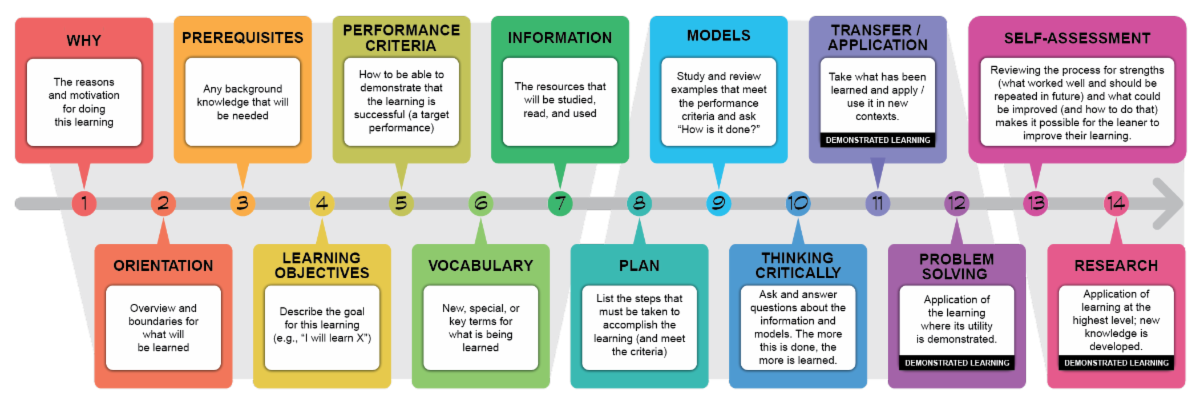
The sixth step is of the LPM is
VOCABULARY
In
this step, learners work to identify
essential concepts that must be understood
and remembered with respect to what
they're learning.
Analysis techniques
such as concept mapping and memory strategies
such as chunking help with deeply learning
the concepts.
|
|
|
|
The concepts
should be collected from all relevant
information resources (e.g., text, notes,
and articles) and appropriate categorization
or organization techniques should be
used before moving forward to memorizing
or using the terms.
Simply
put,
vocabulary
is the
LPM step that helps students learn the
language of the topic they’re studying.
|
|
Matthew
Watts, professor and curricula designer
shares more in
The Learning Process Methodology: A
Universal Model of the Learning Process
and Activity Design
(International
Journal of Process Education,
June 2018)
The identification
and learning of vocabulary phase also
includes the study of terminology and
notation. According to Davis (1944),
the study of vocabulary is essential
to reading comprehension, the foundation
of reading for learning. Knowing the
specific vocabulary terms and their
precise meaning allows learners to interpret
resources and communicate effectively
in speech and in writing. While it is
common for textbooks to include important
vocabulary as part of a summary or index,
the salient inclusion of these items
in the early stages of the learning
activity is warranted (Richardson &
Morgan, 1990). The activity component’s
name is often dependent upon the content
area; however, its necessity permeates
across the curriculum. A strategy for
studying relevant terminology should
be included in the course or program
design as it has been seen that “students
will skip over unfamiliar words” otherwise
(McMurray, Laffey, & Morgan, 1979).
A typical best practice is to have learners
use the words in context or write definitions
in their own words (i.e., create their
own glossary).
References
-
Davis,
F. B. (1944). Fundamental factors
of comprehension in reading,
Psychometrika,
9, 185-197
-
McMurray,
M., Laffey, J., & Morgan, R.
(1979).
College students’ word identification
strategies.
Twenty-Eighth Yearbook of the National
Reading Conference.
-
Richardson,
J. S., & Morgan, R. F. (1990)
Reading to learn in the content
areas.
Belmont, CA: Wadsworth.
|
|
|
When
learners
don’t
have the words (or symbols) for particular
concepts, they experience
hypocognition:
being unable to communicate cognitive
and linguistic representations.
(There's a separate article about hypocognition
later in this newsletter.)
“As cognitive
psychology affirms, having a verbal
label—even
a nonsensical terminology, an apparent
portmanteau—can
distill a nebulous phenomenon into an
experience that’s more immediate and
concrete.” (Hypocognition
is a censorship tool that mutes what
we can feel)
When all you have is a hammer, every
problem is a nail.
When the only word you have is
nail,
you can’t work with
the concepts
tack,
rivet,
staple,
screw,
or
fastener.
As Watts
explained, if we want learners to be
able to think clearly about new concepts,
we need to
not only provide
them with the words and symbols for
those concepts but
help them add those words/symbols to
their vocabulary.
When the new term is part of their vocabulary,
the learner can link previously understood
concepts to new concepts, thereby transferring
and generalizing, both of which are
higher levels of learning.
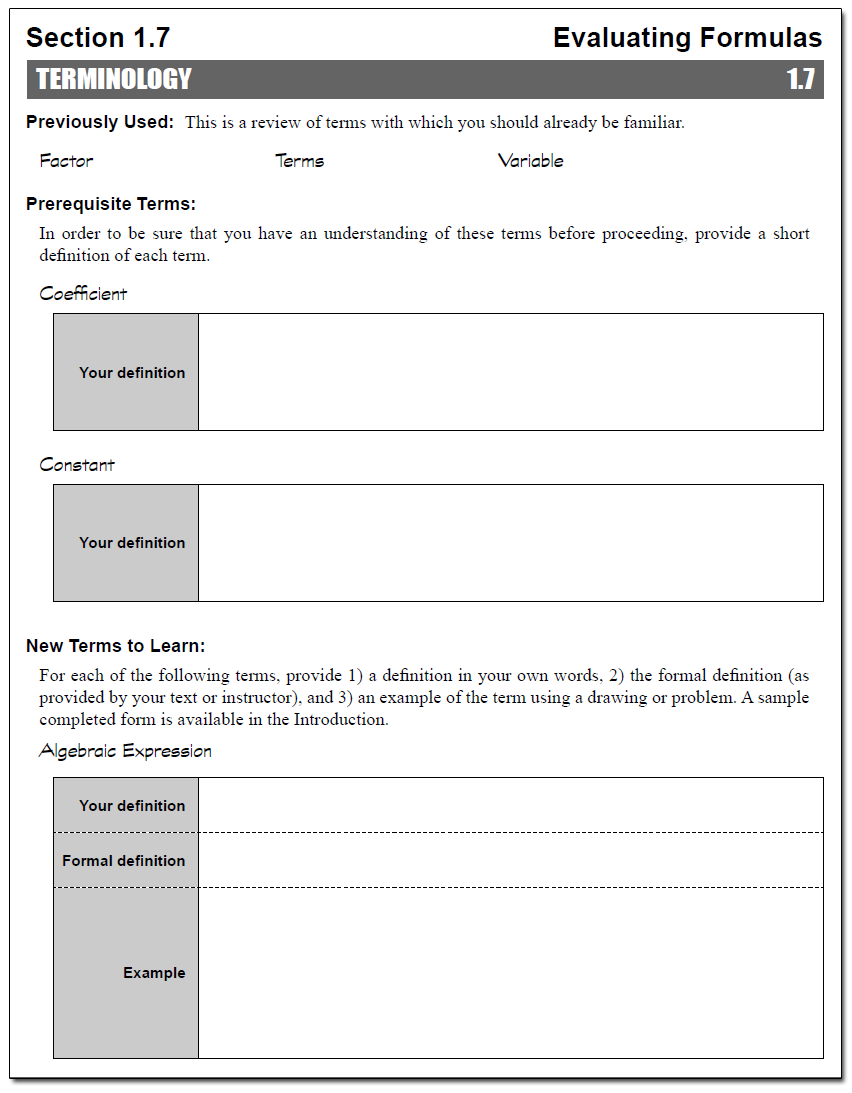
Below
is one example of how to do this (from
our book
Foundations of Algebra: A Workbook).
|
|
|
Terms
the learner should have a strong grasp
of are simply listed to trigger
the learner's memory.
Terms
the learner has recently learned
are shown as "Prerequisite Terms" and
the learner is prompted to share a definition
of each, bringing them more firmly to
mind.
New
terms are shown, each with space
for the learner to provide a definition
in their own words, a formal definition,
and then an example of the term in a
drawing or problem (the term being used
mathematically rather than in a sentence).
|
|
|
VOCABULARY
in the
Student Success Toolbox
|
|
|
|
As Matthew
Watts shared,
the study of vocabulary is essential
to reading comprehension, the foundation
of reading for learning.
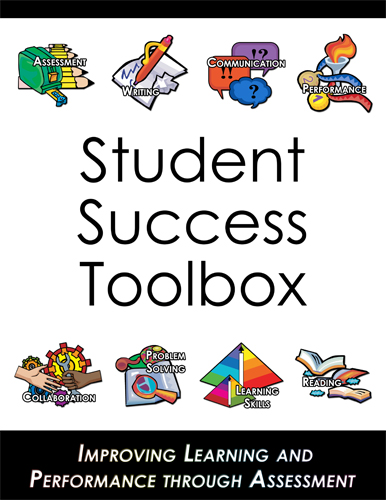
This is why the
Student Success Toolbox
features a handful of tools specifically
targeting vocabulary.
These
include the full
Reading Methodology,
Step 5 of which is "Vocabulary terms:
Browse the reading for vocabulary terms
that are unfamiliar (keep a dictionary
handy to look up unfamiliar words and
write down definitions so you can refer
back to them)."
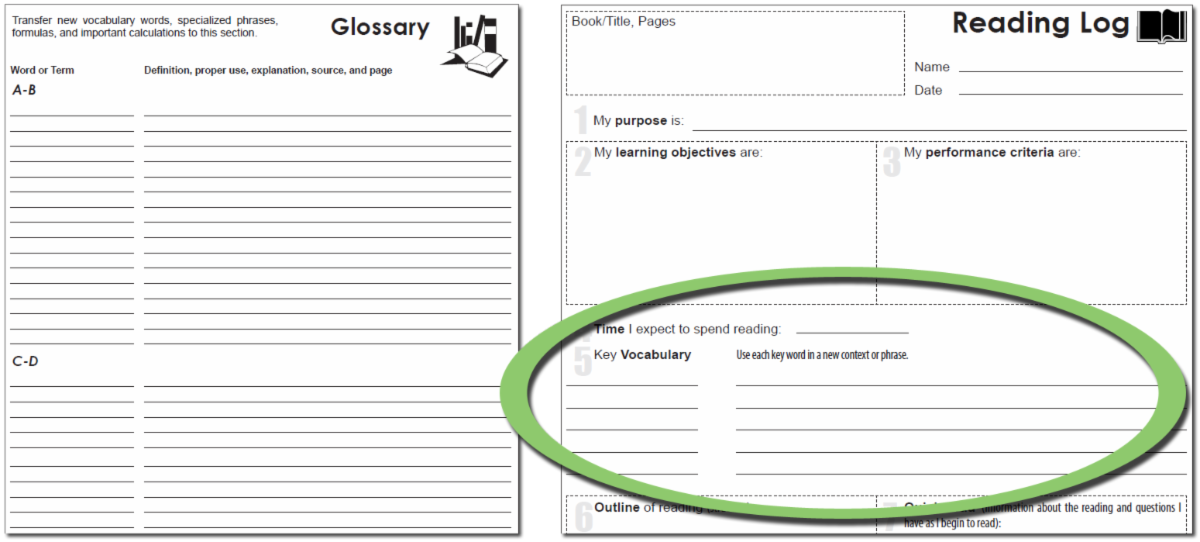
The
Student Success Toolbox
also includes a multi-page
Glossary
(for
students to record words/terms/formulae
along with their definitions) and multiple
Reading Logs
(students record key vocabulary and
use each in a sentence or phrase). See
the image below.
If the
goal is to ensure that students actually
understand new vocabulary terms, a critical
step in learning, then giving them the
tools that make that easier is a no-brainer!
|
|
|
Let's take a moment and recognize that
hypocognition
is a new term for many of us. Even as
we’re learning about the vocabulary
step of the LPM, we're encountering
at least one new vocabulary term! (Not
you, smartypants, but the rest of us.)
If we want to truly pull the word into
our current vocabularies, we need to
do more than just encounter it. Let's
see if we can take what we've learned
about making terms stick and make it
happen.
Let's look at the word itself:
hypocognition
According to Wiktionary, it was coined
from
hypo- + cognition
by Robert Levy (who is covered in the
article below):
hypo-
(from Ancient Greek):
Deficient, less than normal
cognition:
The process of knowing, of acquiring
knowledge and understanding through
thought and through the senses.
And here's a wonderful resource for
learning more about hypocognition:
Hypocognition: Making Sense of the Landscape
Beyond One's Conceptual Reach
(Originally published in the March 2018
Review of General Psychology 22(1):25-35)
Let’s keep going with this, connecting
both the word and concept it represents
to the world around us. Dr. Kaidi Wu,
co-author of the article above, explains
how hypocognition can be weaponized
against a population:
Intentional hypocognition can serve
as a powerful means of information control.
In 2010, the Chinese rebel writer Han
Han told CNN that any of his writings
containing the words ‘government’ or
‘communist’ would be censored by the
Chinese internet police. Ironically,
these censorship efforts also muffled
an abundance of praise from pro-leadership
blogs. An effusive commendation such
as ‘Long live the government!’ would
be censored too, for the mere mention
of ‘government’. A closer look reveals
the furtive workings of hypocognition.
Rather than rebuking negative remarks
and rewarding praises, the government
blocks access to any related discussion
altogether, rendering any conceptual
understanding of politically sensitive
information impoverished in the public
consciousness. ‘They don’t want people
discussing events. They simply pretend
nothing happened… That’s their goal,’
Han Han said. Regulating what is said
is more difficult than ensuring nothing
is said. The peril of silence is not
a suffocation of ideas. It is to engender
a state of blithe apathy in which no
idea is formed. (Hypocognition
is a censorship tool that mutes what
we can feel):
. . .
Did it work?
Is
hypocognition
potentially part of your vocabulary
now?
Can you use it in a conversation?
Can you spot it in the world around
you?
Are you able to think more clearly about
the concept it represents?
|
|
|
For most educators within higher education,
the discipline of teaching and learning
is a second discipline that is best
served by resources that integrate educational
theory with classroom practice.
|
|
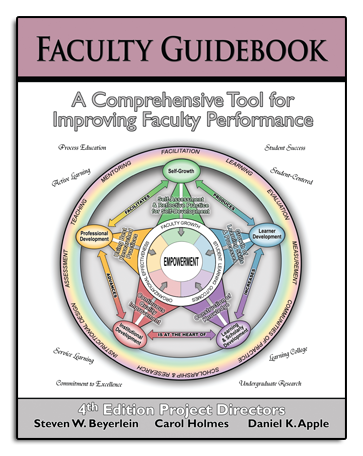
This
is the design philosophy behind the
Faculty Guidebook
and why we touch on it in nearly every
topic we feature!
|
|
|
Something to Think About...
|
|
|
|
|
“Education
either functions as an instrument which
is used to facilitate integration of
the younger generation into the logic
of the present system and bring about
conformity or it becomes the practice
of freedom, the means by which men and
women deal critically and creatively
with reality and discover how to participate
in the transformation of their world.”
—
Paolo Freire
(Brazilian educator & philosopher)
|
|
Monthly Self-Growth Tip:
Persistence
vs.
Moving
On
When
should we continue to be vested in something,
giving our effort and energy in working
towards success and when should we let
it go and move on?
|
|
|
|
Sticking with it isn’t always the right
choice!
Having a set of criteria to help answer
this question is a great idea.
Consider
the following questions to get you thinking:
-
How
valuable is the outcome and success?
-
How
much control do you have in whether
or not you succeed?
-
How
much do you value the experience
itself?
-
What
other opportunities are you missing
while you persist with this work?
-
How
is your continued persistence affecting
people you care about (for better
AND worse)?
When
you’re coming up with
your own criteria,
be sure to take time to consider contexts
like your relationships, emotional connections
(to things/ideas/the past), projects,
goals, and your health.
|
|
|
|
Learn to Learn for Success course starting
up in early May!
This
is a
custom
version
of Learn to Learn for Success and we
can do the same for you! Click below
to earn more about this powerful course
that helps struggling students turn
things around (or just get the bet prep
possible for college success).
|
|
The 2025 PE Conference is hosted by
the
Academy of Process Educators
and the University of Indianapolis (UIndy)
Tuesday, June 3 through Thursday, June
5
1-day pre-conference workshop
(Developing
Performance to Unlock Your Limitless
Capability)
on
Monday, June 2
Breakout sessions will be focused on:
-
Innovating with PE Tools & Techniques
for the Post-Covid Era
-
Leveraging Instructional Technologies:
AI, LMS, eLearning, Distance Education
-
Reconciling Life’s Challenges
-
Enhancing Reflective Practice
-
Deploying Learner-Centered Communication
-
Incorporating International Perspectives
-
Advancing Wellness & Self-Care
-
Cultivating Mentorship
Other information:
The conference will be presented in
a hybrid format. In-person participation
at the University of Indianapolis is
encouraged
because of the many advantages of sharing
time and space together. However virtual
options for participating will be available.
|
|
| | |