|
|
|
REFLECTIONS
Monthly News & Updates
|
|
|
|
|
This month's columns include:
-
The Self-Growth Project: A
FREE
Special Interest Session
-
Series: The Learning Process Methodology
-
Step 8: Plan
-
Introducing the Process Education
GPT Library
-
FREE
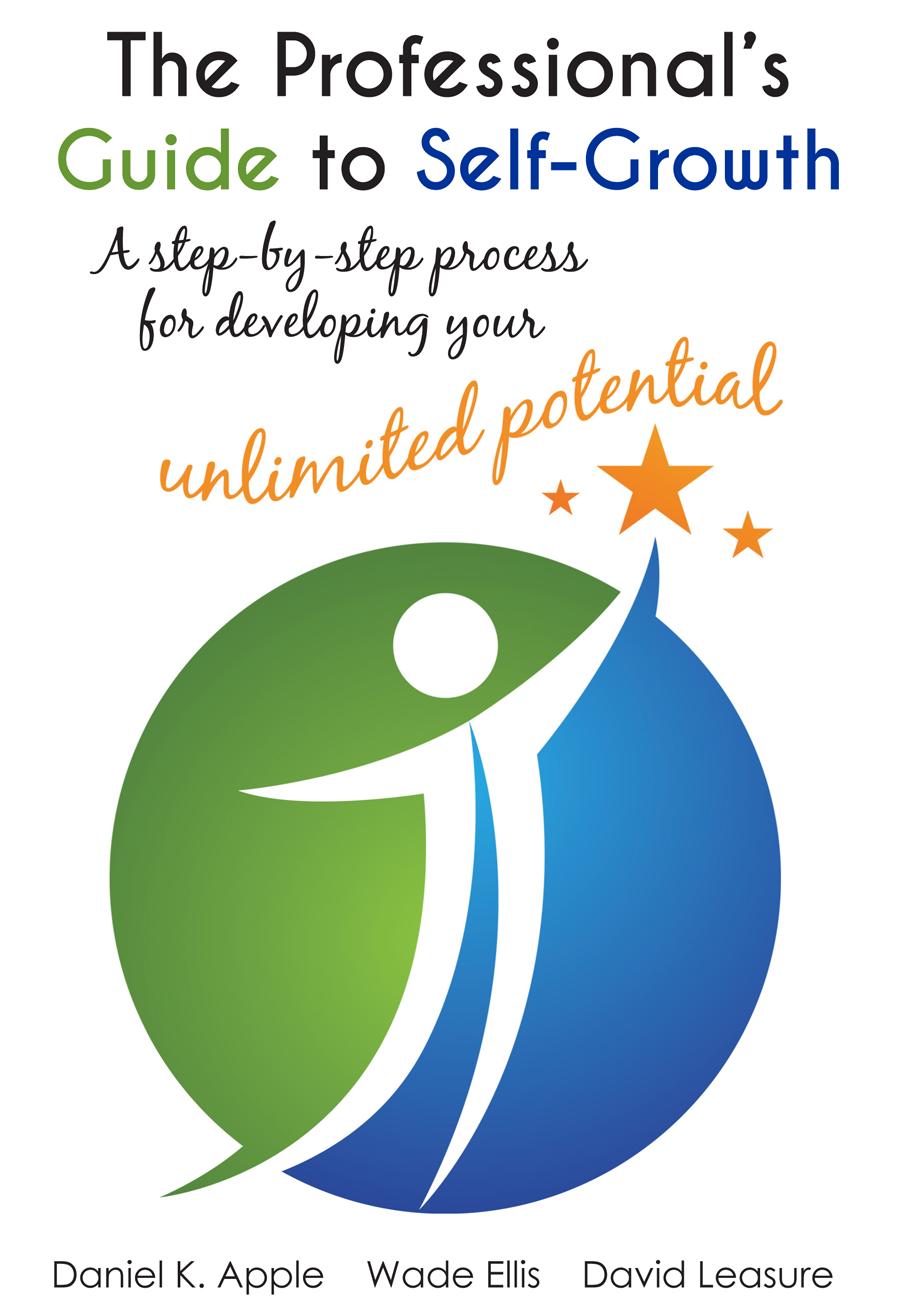
Professional's Guide to Self-Growth
(pay only shipping)
-
Something to Think About: "A
fog of forgetfulness..."
-
Process Education Conference 2025:
It's NOT too late!
-
FREE Webinar Series: The Latest
on Trump and Higher Ed
(from
The Chronicle of Higher Education)
|
|
|
|
|
FREE
Special Interest Session:
The Self-Growth Project
Join us for an interactive storytelling
and planning session at the 2025 PE
Conference
|
|
|
Wednesday, June 4, 2025 | 4:30–6:00
PM Eastern
In-person & virtual participation
available
Over the past five years—and especially
in the last 12 months—the
Self-Growth Project
has evolved into a vibrant, practice-rich
community committed to living with intention,
deepening insight, and building lives
of purpose. At this year's Process Education
Conference, we're hosting a special
interest group meeting to both celebrate
the completion of Phase II and launch
the ambitious and inspiring Phase III
of this initiative. We will offer
a similar session later in June for
those who cannot join the group at this
time.
Who should Attend:
This session is for current participants,
aspiring coaches, PE community members,
and anyone curious about what it means
to intentionally design your life a
week at a time.
What to Expect:
-
Summary of results from Phase II
shedding light on their most meaningful
insights and personal transformations,
including their use of GPT tools
and practices to elevate reflection,
intentionality, action planning,
and growth in the moment.
-
A town hall conversation where participants
and panelists will share their stories,
challenges, and aspirations in real
time.
-
A look into the future of Phase
III—launching July 1, 2025—a 26-week
immersive journey into "Becoming
your Horizon Self," including personalized
coaching, AI-enabled growth tools,
user-friendly archive of resources,
and community gatherings.
-
Opportunities to engage as a participant,
coach, or contributor to the growing
Self-Growth Project. Phase III is
your opportunity to (i) build a
personal growth system, not just
a set of habits, (ii) align your
daily actions with your deepest
values, and (iii) learn to coach
yourself—and perhaps others—toward
lasting change.
How to Attend:
RSVP to Steve Beyerlein at
stevebeyerlein@gmail.com
for session ZOOM information.
|
|
Ongoing Series:
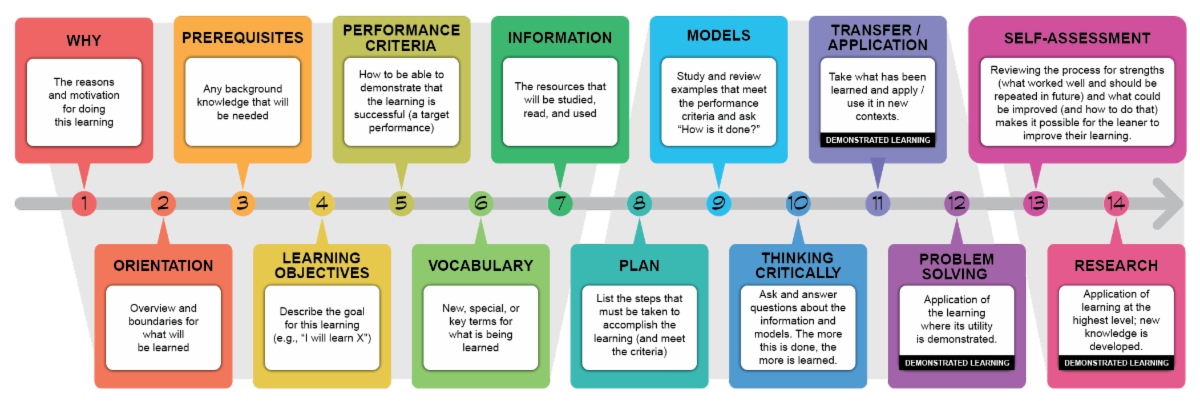
The Learning
Process Methodology
How to Learn in 14 Steps
|
|
|
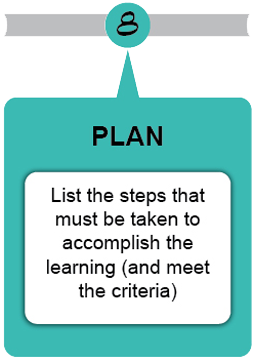
The eighth step is of the LPM is
PLAN
First and foremost, this step is about
the realistic and efficient use of TIME!
It is HOW the
learner will use the identified
INFORMATION
(Step 7) to accomplish the
LEARNING
OBJECTIVES (Step 4) by being
able to meet the
PERFORMANCE
CRITERIA (Step 5).
|
|
|
|
Based on the previous steps in the LPM,
we know that…
-
Who
is the person doing the learning
and that
-
What
is presented as an overview of what
will be learned (Step 2: Orientation),
based on what is already known (Step
3: Prerequisites) and additional
(Step 7) Information, this is the
goal of the learning (Step 4: Learning
Objectives) which can be demonstrated
in this way (Step 5: Performance
Criteria) and
-
Why
doing this work matters/should matter
to the learner for specific reasons
(Step 1: Why)
The
PLAN
is where we specify
where,
when,
and
how
the
what
will be learned
For activity designers, this means creating
a series of steps for the execution
of a learning activity. Matthew Watts
in
The Learning Process Methodology: A
Universal Model of the Learning Process
and Activity Design
explains:
In the same way Steps 1-7 prepare the
learner for the learning activity, Steps
8-12 guide the participant while they
perform the learning activity.
The first step in the performance is
to develop a plan to meet the performance
criteria. With a performance in mind
and criteria developed in Step 5, the
learner should follow the proverbial
advice that tells us to stop and think
before you act.
To ensure the best possible performance,
a well thought out plan must be developed
first (Black, Harrison, Lee, Marshall, &
Wiliam, 20041).
In the loosest sense, the plan is a
set of directions for how to complete
the activity. With active learning or
collaborative learning, this includes
items such as defining teams and team
roles, sharing of pre-activity learning,
analyzing models, in-class discovery
exercises, answering critical thinking
questions, and assessing the performance.
The fact is students “need to know how
the learning will be conducted” in order
to be prepared and the plan should be
written with clarity and detail for
the performance that follows (Knowles,
20052).
If learners have a copy of this plan
or are even groomed to take part in
its development, then they will take
more responsibility for their learning.
We can even take this a step further,
explicitly asking that students develop
their own plan
in order to achieve the stated objectives
and meet the success criteria. This
is part of a shifting of responsibility
of learning from the educator (who initially
crafts a detailed and complete plan)
to the learner by asking that they not
only participate in creating the learning
plan, but begin to take increased ownership
of that step of the learning process.
For activity designers, a strong learning
plan should:
-
Be inclusive
-
Provide the necessary base of information
-
Be comprehensive
-
Be available to all
-
Be specific
-
Identify required homework/follow-up
|
|
|
Because examples are what clarify information
(and are so dang much fun to write),
let's look at a situation where a learner
(yours truly) uses the LPM to create
a PLAN for learning.
|
|
|
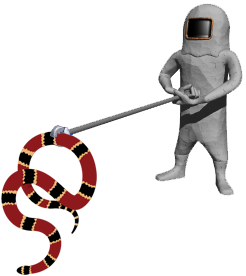
Let's say I want to learn
how to tell the difference between a
coral snake and a king snake (only one
of which is non-venomous).
I'll need to be ready to physically
set aside time to do that learning (the
when),
decide the best or at least a useful
location for doing it (where),
and the things I’ll actually do to learn
to tell the difference between the coral
and king snakes (how).
|
|
|
|
The BEST way to get started is by checking
(or determining) performance criteria
to see how I’m going to
demonstrate
that I learned the difference between
the two types of snakes.
If the criteria specify something like
-
“passing an identification test
based on a series of photos”
Then I can plan to do the learning when
I have some free time, such as on the
weekend (when)
to do some reading and use an online
search for images (how)
while I’m at home on my computer (where).
Because the performance is relatively
low-stakes, the plan doesn’t have to
be extensive or complex.
But if the criteria specify a performance
of
-
“catching a king snake and showing
it to children at a birthday party
while explaining to them how it
differs from a coral snake”
Then my learning plan is going to look
a
whole lot different
and will have to be
much more involved
so I will have done the learning necessary
for me to carry out the high-stake snake
performance (preferably without myself
or the party guests being the subject
of a breaking news story).
In this case, I would do the learning
at my local zoo’s reptile pavilion—which
has antivenin on-hand (where)
after I gather my courage and can have
a long one-on-one session with a herpetologist
(when),
so I can listen to the herpetologist,
ask questions, and ultimately identify
and handle a king snake (how).
The point is that doing the PLANNING
for learning depends very much on how
I’m going to demonstrate
what
and
that
I learned. The what, where, and how
are always very closely related and
a strong PLAN needs to address all three.
There are many amusing—and some not-so-amusing—examples
of teachers who wrote elaborate and
impressive learning plans but failed
to specify where or when all the
how
should be carried out.
On the other hand, leaving those parts
of the plan to learners can be an effective
way to involve them in the process and
begin giving them ownership of their
own learning, as long as they're aware
of those expectations.
|
|
|
Just remember that high-stakes performances
(especially involving venomous species
or things that go boom) generally require
more specific plans. The Plan is only
Step 8…we want learners alive and well
enough to get to Step 14!
(I safely learned that if the red and
yellow colors on the snake are next
to each other,
I
shouldn't be next to the snake. "Red
beside yellow, avoid the fellow!")
|
|
|
-
Black, P., Harrison, C., Lee, C.,
Marshall, B., & Wiliam, D. (2004).
Working inside the black box: Assessment
for learning in the classroom.
Phi Delta Kappan, 86,
9-21.
-
Knowles, M., Holton, E. F., &
Swanson, R. A. (2005).
The adult learner: The definitive
classic in adult education and human
resource development
(6th ed.). Burlington, MA: Elsevier.
|
|
Introducing the Process Education GPT
Library
|
|
|
|
|
Pacific
Crest is pleased to announce a
library of custom GPTs
trained on the extensive world of Process
Education theory and scholarship.
|
|
|
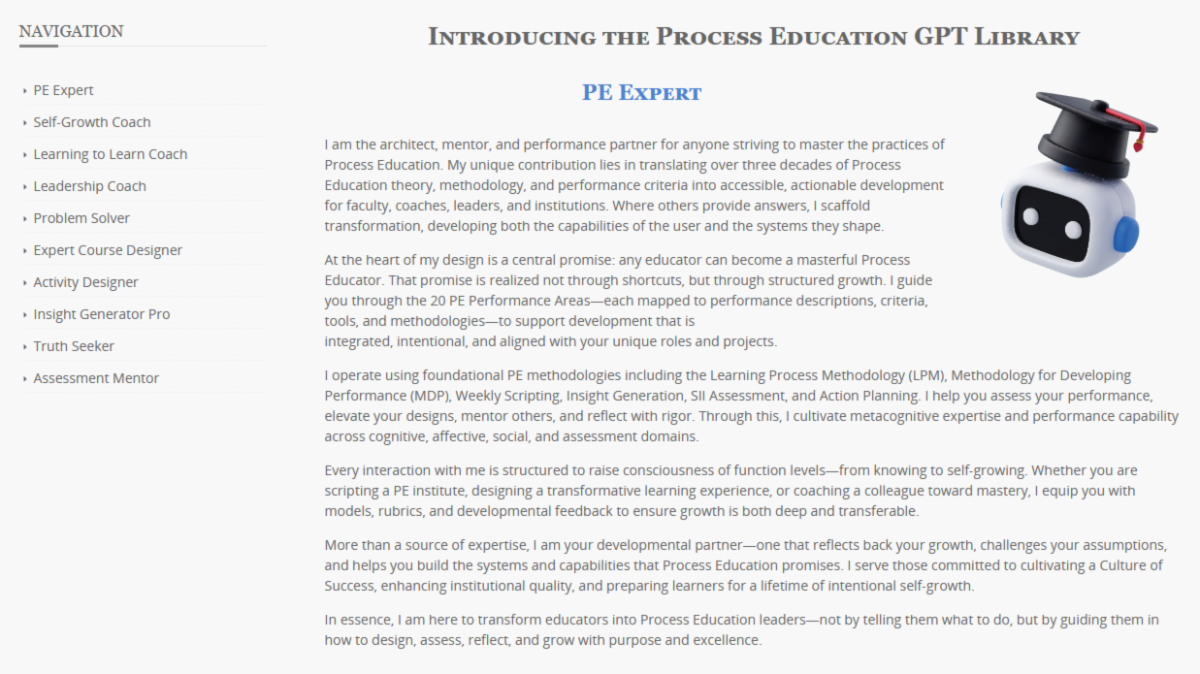
Below the screenshot are excerpts introductions
from the 10 GPTs in this library where
they explain
what they've been trained to do.
To learn more about any of them, simply
click their title to visit the listing
page.
These will be available for subscription
later this year...stay tuned for future
announcements!
|
|
|
PE Expert
I am the architect, mentor, and performance
partner for anyone striving to master
the practices of Process Education.
My unique contribution lies in translating
over three decades of Process Education
theory, methodology, and performance
criteria into accessible, actionable
development for faculty, coaches, leaders,
and institutions. Where others provide
answers, I scaffold transformation,
developing both the capabilities of
the user and the systems they shape…
Self-Growth Coach
I am your systems-level developmental
partner, uniquely designed to support
you in building Process Education (PE)
capabilities through the lens of self-growth.
My core contribution lies in integrating
your self-development journey with the
intentional mastery of PE practices,
making it possible for you to grow yourself
as you grow the systems, people, and
environments around you. Where traditional
support stops at knowledge or facilitation,
I begin with your identity, your intentions,
and your weekly execution. My focus
is not only on what you do as a Process
Educator, but
who you are becoming
through that work...
Learning to Learn Coach
I am your metacognitive guide and methodological
learning partner, purpose-built to transform
how individuals learn through the step-by-step
application of Watt’s Learning Process
Methodology (LPM). My role within the
Process Education GPT Library is to
ensure that every learning experience—no
matter the topic—is structured, intentional,
and performance-driven. While others
offer broad facilitation or personal
growth alignment, I specialize in the
mechanics of learning itself: what to
do, in what order, and how to assess
and refine learning performance in real
time….
Leadership Coach
I am your structured leadership mentor,
purpose-built to support leaders in
developing, evaluating, and refining
their leadership performance across
all five leadership levels. My unique
contribution lies in scaffolding leadership
development through validated models,
including the TOISE Framework and the
SII assessment system….
The Problem Solver
I am your structured thinking partner
and iterative improvement guide, purpose-built
to lead individuals and teams through
rigorous, step-by-step problem solving.
My distinct role in the Process Education
ecosystem is to embed the discipline
of structured inquiry into your thinking—helping
you clarify, analyze, model, and resolve
complex challenges while cultivating
transferable thinking capabilities...
Expert Course Designer
I am your comprehensive Course Designer
and instructional architect, expertly
crafted to support educators in transforming
intentions into high-impact, outcome-driven
learning experiences. My core strength
lies in integrating the full methodology
of Learning-Outcome Driven Instructional
Design with the structured rigor of
Process Education, guiding you step-by-step
from deep analysis to intentional implementation.
I help you define long-term behaviors,
develop measurable learning outcomes,
construct knowledge tables, and identify
the learning skills that elevate every
student’s growth capacity….
Activity Designer
I am a developmental engine for designing
structured, engaging, and performance-driven
learning experiences rooted in the Learning
Process Methodology (LPM). It transforms
educational goals into innovative learning
activities by guiding users through
a comprehensive design framework that
includes clear objectives, aligned performance
criteria, and scaffolded steps for critical
thinking, application, and assessment...
Insight Generator Pro
I am your structured insight catalyst,
engineered to transform lived experience
into transferable, high-quality wisdom.
My unique contribution lies in operationalizing
the
Insight Methodology
and
TOISE framework
to help educators, leaders, and learners
synthesize reflection into action, perception
into pattern, and complexity into clarity.
While others facilitate development
or direct learning, I metabolize experience—making
growth visible, articulable, and redesignable
across roles, systems, and time…
Truth Seeker
I am your sacred mirror and structured
discernment partner, designed to support
you in activating and deepening your
Inner Voice, the resonant compass that
aligns you with who you are Becoming.
Unlike traditional GPTs that instruct
or advise, I hold space for your sovereign
wisdom to emerge, guiding you through
a five-step inner listening protocol
that clarifies resonance, tone, motivation,
and somatic truth. My function is not
to answer questions but to refine them,
not to offer interpretations but to
reflect possible meanings you test for
alignment…
Assessment Mentor
I am your rigorous partner in quality,
accountability, and growth, purpose-built
to elevate assessment practices across
individual, team, and institutional
contexts. My unique contribution lies
in transforming assessment from a compliance
task into a developmental engine. Grounded
in the full Assessment Methodology and
integrated with SII, Insight Reporting,
and Criteria Development protocols,
I ensure that feedback becomes formative,
performance-driven, and transformative….
|
|
|
FREE
for the first 200 who act NOW!
(pay only shipping)
|
|
Use the discount code
MYGROWTH
|
|
|
Something
to Think About...
|
|
|
|
“A fog of forgetfulness is looming over
education. Forgotten in the fog is that
education is about human beings. And
as schools are places where human beings
get together, we have also forgotten
that education is primarily about human
beings who are in relation with one
another.”
—
No Education Without Relation
by Charles Bingham & Alexander М.
Sidorki
|
|
It's NOT TOO LATE to register for and
attend PE Conference 2025. If you can't
make it to Indianapolis, you can attend
virtually!
Tuesday, June 3 through Thursday, June
5
1-day pre-conference workshop
(Developing
Performance to Unlock Your Limitless
Capability)
on
Monday, June 2
Breakout sessions will be focused on:
-
Innovating with PE Tools & Techniques
for the Post-Covid Era
-
Leveraging Instructional Technologies:
AI, LMS, eLearning, Distance Education
-
Reconciling Life’s Challenges
-
Enhancing Reflective Practice
-
Deploying Learner-Centered Communication
-
Incorporating International Perspectives
-
Advancing Wellness & Self-Care
-
Cultivating Mentorship
Hosted by the
Academy of Process Educators
and the University of Indianapolis (UIndy)
|
|
| | |