|
|
|
REFLECTIONS
Monthly News & Updates
|
|
|
|
|
|
We're pleased to introduce
Ashley Van Slyke
who was recently appointed as
Vice President of Operations.
With a degree in Business Marketing
and past experience in order fulfillment,
inventory management, and customer service,
Ashley is a great fit for keeping these
parts of the business running smoothly.
|
|
|
Though she's incredibly modest, we did
convince her to share a few words:
"While Auston and I currently live
in Fort Worth, Texas, I was born and
raised in Colorado and earned my B.S.
in Business Marketing from Metropolitan
State University of Denver. My career
has taken me through a wide range of
industries—from 15 years in the beauty
field to managing an Auto parts eBay
store, as well as office and admin roles
in marketing, childcare, and healthcare.
I began supporting Pacific Crest in
2023 and attended the Self-Growth Institute
that year. Beyond work, I’m passionate
about reading, discovering global cuisines,
and expanding my knowledge of health/nutrition,
travel, and the natural world. One of
my favorite hobbies is using the app
Seek to identify and catalog plants
and animals I come across while enjoying
the great outdoors."
Welcome, Ashley!
|
|
|
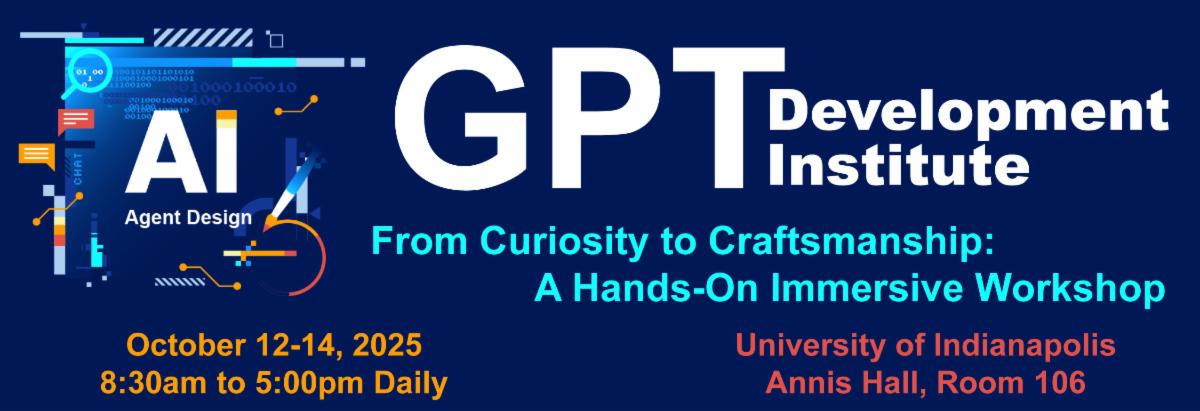
This intensive, practitioner-focused
workshop showcases 10 high-quality,
customized AI Agents (GPTs) developed
using the Pacific Crest Design Process.
Attendees will gain direct insight into
what makes an AI Agent not just functional,
but transformational. Participants will
then go on to build their own AI Agents!
|
|
|
|
Cost
$500 per person
Bring 2 from your college, the 3rd attends
free!
Whether you're an educator, developer,
coach, or curious innovator, you’ll
walk away with a clear framework and
hands-on experience for creating AI
Agents that foster self-growth, enhance
decision-making, and elevate performance
in any domain.
Workshop activities
Over the course of the workshop, participants
will:
-
Interact with exemplary AI Agents
in live demos
-
Break down what distinguishes quality
AI Agent design
-
Apply the Pacific Crest Design Process
to craft AI Agents that integrate
methodology, growth capability,
and quality mindset
-
Learn how to align AI Agents with
life, learning, and leadership purposes
Day 1
Showcase of 10 GPTs
Days 2 & 3
Participants build their own AI Agents
using GPT Designer, Universal Manual
Designer, Problem Solver, etc.
Limited Seats Available. Reserve your
spot early.
Take your AI Agent design expertise
to the next level.
|
|
Episode 3
Shifting Your Classroom Culture from
Traditional to Transformational
(FREE!)
|
|
|
This insightful deep dive explores the
subtle yet powerful impact of
educational culture,
contrasting traditional approaches with
transformational cultures
that actively cultivate student success
in higher education, rather than merely
managing it. Using a comprehensive framework,
it reveals how your faculty mindset
and daily practices are not just influential,
but
causal,
directly impacting student mindsets
and behaviors and offering immense power
to mitigate conditional risk factors.
By examining crucial aspects like
academic challenge,
cognitive complexity,
learner ownership,
and the student-faculty relationship,
the discussion illustrates how intentional
shifts such as from 'making things easy'
to truly empowering students through
challenge, fostering deep understanding,
nurturing self-direction, and building
supportive mentorships can lead to students
becoming resilient, self-motivated,
critical-thinking intellectual explorers.
This is more than just adopting new
techniques; it's about embracing a fundamental
cultural shift that empowers every student
to believe in their potential, discover
their own strength, and become the architect
of their own success, creating lasting
ripple effects far beyond your classroom.
|
|
Based on the article
Impact of Higher Education Culture on
Student Mindset and Success
by Apple, Jain, Beyerlein, and Ellis,
published in the International Journal
of Process Education (June 2018, Volume
9 Issue 1)
www.ijpe.online/2018/culture.pdf
Created with the help of Notebook LM.
|
|
Ongoing Series:
The Learning
Process Methodology
How to Learn in 14 Steps
|
|
|
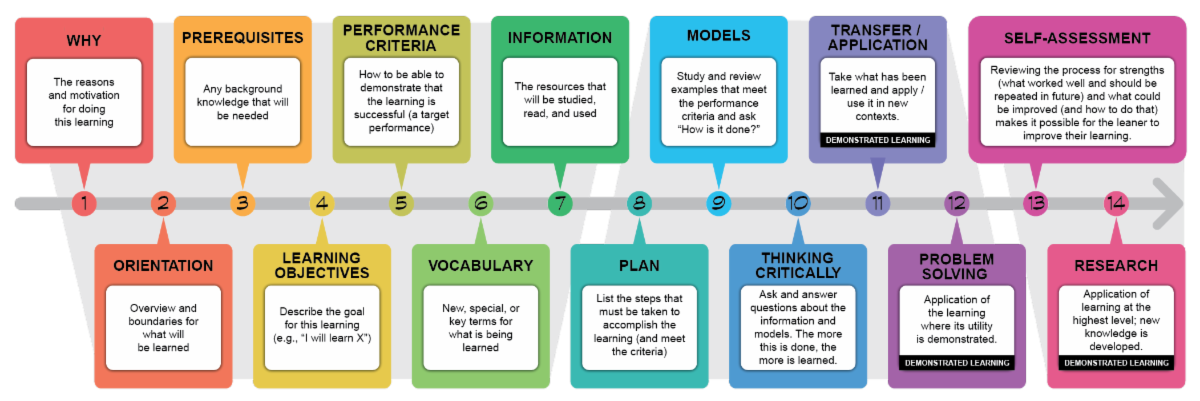
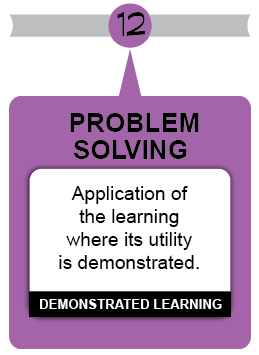
The twelfth step is of the LPM is
Problem Solving
If we took a trip in the Way Back Machine
to 1992, we'd not only be able to observe
a world without The Kardashians, but
also (and much more importantly), publication
of
Learning Through Problem Solving
by Apple, Beyerlein & Schlesinger.
This book was the origin of the
Learning Process Model
but also offered the
Problem Solving Methodology—a
model of the problem solving process.
|
|
|
|
Learning and Problem Solving: Interdependency
|
|
The relationship between the processes
of learning and problem solving is more
than close; they are actually interdependent.
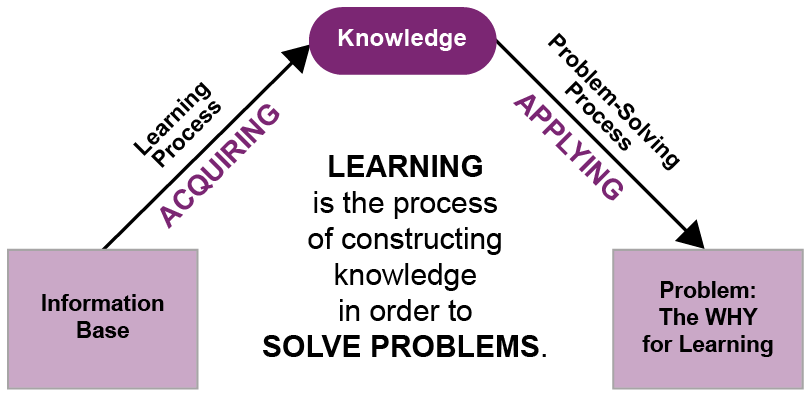
The model above was presented in
Education as a Process
(Apple & Hurley-Lawrence, 1994),
demonstrating that learning produces
transferable knowledge (acquisition
process) while problem solving is the
sophisticated usage of this knowledge
in a specific situation (application
process).
The critical point is that
problem solving is the application of
knowledge gained through learning.
This means that this step of the Learning
Process Methodology
might just be the whole POINT of the
LPM!
When individuals start the learning
process themselves, they are almost
always doing it to solve a problem they’re
facing. In our classrooms, we guide
our students through the learning process
for the specific purpose of preparing
them to solve future problems.
And (again), as with riding a bicycle
and so much else,
the best way to learn how
to solve problems is
by solving problems.
There is a wealth of research that shows
that students don’t get better at problem
solving by watching teachers solve problems.
Students have to grapple with problems
themselves
in order to build and hone problem solving
skills. It is their proficiency in the
performance of problem solving that
demonstrates the degree to which they
understand at the
level of application
(which is really obvious if we stop
and think because, as the graphic shows
so clearly, the problem solving process
is where knowledge is APPLIED).
Bobrowski (2007) elaborates that at
the application level of knowledge,
|
|
...the learner has the skill to apply
and transfer the particular item of
knowledge to different situations and
contexts, can recognize new contexts
and situations to skillfully make use
of this knowledge, and has taken the
time to generalize the knowledge to
determine ways to apply it, testing
boundaries and linkages to other information.
In other words, a learner with Level
III knowledge is able to solve problems.
|
|
According to Leise et al. (2007), the
application of knowledge is
enhanced
(i.e., the problem solving process is
improved) by the challenge to solve
more complex types of problems that
are closer to those worked on
by experts in the field.
Hanson (2007) describes these kinds
of problems and their tendency to be
what we might call
messy
in
Designing Process-Oriented Guided-Inquiry
Activities:
|
|
These problems present new situations
that require students to transfer, synthesize,
and integrate what they have learned.
The purpose is to move them to the problem-solving
level of knowledge. The problems often
have a real-world context, contain superfluous
or missing information, have multiple
parts, do not contain overt clues about
the concepts needed to arrive at a solution,
and may not have a right answer.
|
|
Not only should we be challenging our
students with the types of problems
that experts deal with, but experts
in the student’s life or chosen field.
The more relevant a problem’s context
is
to students’ lives, both now and in
the future,
the more motivating it is
(Clark, Dobbins, & Ladd, 1993).
This isn’t a difficult thing for disciplinary
courses (where engineering professors
teach engineering students how to solve
engineering problems, for example),
but as Watts (2018) points out, this
can be challenging in general education
courses, where students are all focused
on different career paths.
|
|
Nevertheless, we’ve figured out a couple
of techniques that seem to work quite
well in our own general education curricula
(Learn
to Learn: Becoming a Self-Grower
by Apple, Morgan, & Hintze, 2013):
|
|
|
|
|
In
the first technique, we ask students
to
use their own lives as human beings
as the context for demonstrating problem-solving
skills. The examples focus on deciding
how to divide up rent among roommates
who get different sized bedrooms, navigating
to a location with which they’re unfamiliar
after they’re given basically terrible
instructions and information), deciding
which holiday job to take as the best
solution, when there are specific and
complicated family circumstances, and
other similar real-life and relatable
dilemmas. We offer them methodologies
and models, giving them practice with
specific problems as skill exercises,
but then do one of two things:
|
-
Either task them with applying the
knowledge they’ve acquired to a
problem that is likely to
involve a context they deal with
in their own lives:
|
|
Example:
“Select one team of which you are a
member, and one community of which you
are a part, where you feel that you
are not contributing at the level you
would like. Perform a self-assessment
of your performance for the roles (formal
or informal) that you play in each,
using the Holistic Rubric for Performing
in a Team.”
|
-
Or
task them with
choosing their own context
for applying the knowledge they’ve
acquired:
|
|
Example:
“Apply the Problem Solving Methodology
to solve a long-standing problem in
your own life. Document your use of
each step.”
|
|
|
|
|
The second technique relies on us understanding
that
students all share some common challenges
as students
and in performing as students: scheduling,
time management, grade requirements,
preparing for exams, writing assignments,
etc. These areas are fruitful for problem
solving challenges. In one, we ask students
to analyze and assess their performance
in high school. In another, we challenge
them to plan out their entire semester
(all exams and deadlines). A third asks
them to analyze their monthly budget,
finding at least five ways to reduce
their expenses as a student (a challenge
which combines both techniques!).
|
|
|
Beyond determining the
types of problems and contexts
students should work with, we need to
consider what we can do to meet the
overall goal in problem solving within
a course:
helping learners become more expert
in problem solving. An important first
step is for us to being able to distinguish
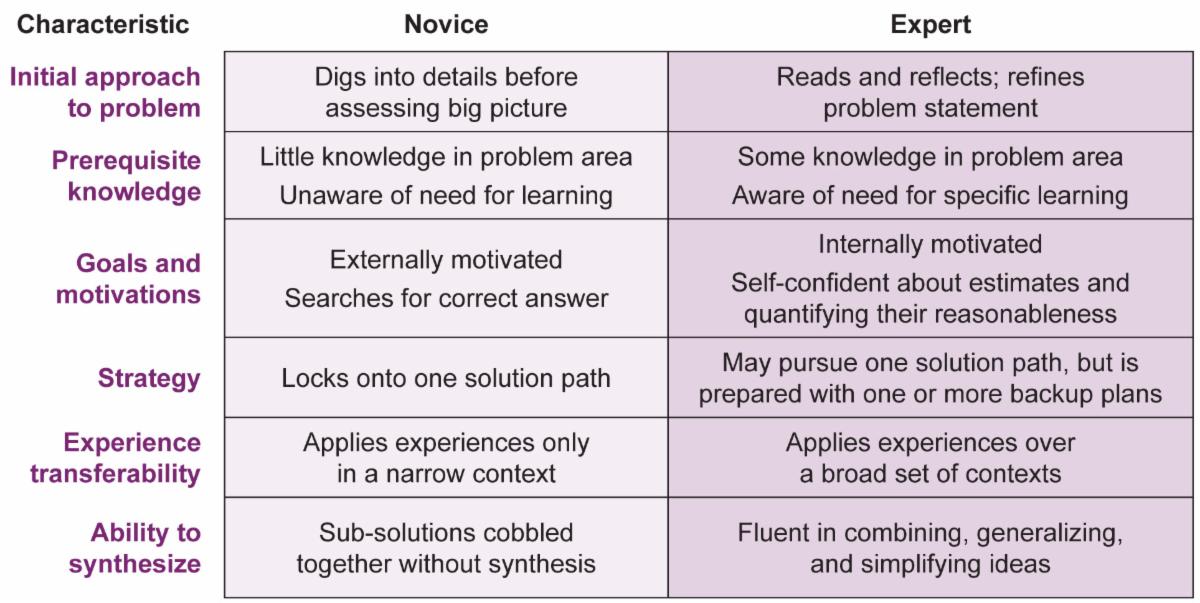
between those two levels. In Overview
of Problem Solving (2007), Morgan and
Williams offer a table delineating the
differences between the two:
Differences Between Novice and Expert
Problem-Solvers
|
|
|
As for techniques to help learners go
from
novice
to
expert
problem solvers, we can do no better
than to share Nygren’s (2007) eight
wonderful tips:
-
Generalize understanding.
Ask learners to write paragraphs
about applying their knowledge in
a familiar context (e.g., current
and voltage analysis of an electric
circuit in a homework problem);
applying their knowledge in an unfamiliar
context (e.g., flow and pressure
analysis of a fluid piping network,
or series and parallel combinations
of mechanical spring elements);
and generalizing their knowledge
by describing similarities and differences
between the two contexts, identifying
common underlying principles.
-
Categorize problems.
Develop proficiency in problem classification
by asking colleagues, mentors, and
students to tackle problems in a
variety of contexts. Have faculty
and students rank these problems
by level of difficulty, justifying
their reasoning. This activity can
give insight about the range of
problem-solving capacity present
in the classroom and give students
a better idea how a particular course
builds toward the working expertise
of a professional.
-
Practice formulation and estimation.
Instead of having learners invest
time in implementing a single, formal
solution, ask them to explain alternate
solution paths and provide an estimate
of the answer.
-
Use self-assessment.
Grow self-awareness and self-control
of problem-solving skills by having
learners document and assess their
problem-solving performance by identifying
strengths, areas for improvement,
and insights.
-
Use a problem-solving methodology.
Unquestionably, the best means for
a learner to tackle a potentially
overwhelming problem is through
the use of a methodology. A solution
is more likely when learners move
through the necessary steps of a
problem-solving process.
-
Assess the use of the problem-solving
methodology.
By examining how well a methodology
for a complex process is employed,
(as opposed to evaluating the solutions
themselves), you provide links with
complementary teaching and learning
processes, such as information processing,
critical thinking, teamwork, and
communication.
-
Validate problem solutions.
Ask students to write a paragraph
describing how to validate their
solutions. The paragraph should
identify the most important assumption
made and explain how the result
might change if that assumption
were changed.
-
Holistic development.
In order to fully build Level 4
proficiency or working expertise,
other aspects of personal development
should also be considered. In particular,
the learner’s affective skills need
to be enhanced in order to counter
learner frustration as the complexity
of the problem-solving situation
goes up and the comfort level decreases.
|
|
Problem solving is not just the 12th
step of the LPM, it’s the whole
point
of learning. And
solving the problem of how best to teach
it, practice it, and become ever more
proficient at it
is the most fundamental aspect of our
vocation.
|
|
"I think the next best thing to solving
a problem is finding some humor in it."
—Frank
A. Clark
(Us too, Frank. Us too.)
|
|
|
Apple, D. K.,
Beyerlein, S., & Schlesinger, M.
(Eds.). (1992).
Learning
through problem solving. Pacific
Crest: Corvallis, OR.
Apple, D. K., &
Hurley-Lawrence, B. H. (1994, July).
Education
as a process. Presented at the
Improving University Teaching Conference,
College Park, MD.
Apple, D., Morgan,
J., & Hintze, D. (2013).
Learning
to learn: Becoming a self-grower.
Hampton, NH: Pacific Crest.
Bobrowski, P.
(2007). Bloom’s taxonomy: Expanding
its meaning. In S. W. Beyerlein, C.
Holmes, & D. K. Apple (Eds.),
Faculty
guidebook: A comprehensive tool for
improving faculty performance
(4th ed.). Lisle, IL: Pacific Crest.
Clark, C. S.,
Dobbins, G. H., & Ladd, R. T. (1993)
Exploratory field study of training
motivation.
Group
and Organization Management, 18,
292-307.
Ellis, W., Apple,
D., Watts, M., Hintze, D., Teeguarden,
J., Cappetta, R., & Burke, K. (2014)
Quantitative
reasoning and problem solving.
Hampton, NH: Pacific Crest.
Hanson, D. (2007).
Designing process-oriented guided-inquiry
activities. In S. W. Beyerlein, C. Holmes, &
D. K. Apple (Eds.),
Faculty
guidebook.
Leise, C., Beyerlein,
S., & Apple, D. K. (2007). Learning
process methodology. In S. W. Beyerlein,
C. Holmes, & D. K. Apple (Eds.),
Faculty
guidebook.
Morgan, J., &
Williams, B. (2007). Overview of Problem
Solving. In S. W. Beyerlein, C. Holmes, &
D. K. Apple (Eds.),
Faculty
guidebook.
Nygren, K. (2007).
Elevating knowledge from level 1 to
level 3. In S. Beyerlein, C. Holmes, &
D. Apple (Eds.),
Faculty
guidebook.
Watts, M. (2018).
The Learning Process Methodology: A
Universal Model of the Learning Process
and Activity Design.
International
Journal of Process Education, 9(1),
111-114. Available at
https://www.ijpe.online/2018/lpm1.pdf
|
|
|
The Self-Growth Community has been focusing
on
reflection
as a theme throughout September. This
builds on writing about life vision
and annual goals in August.
|
|
|
|
|
The
Insight Generator Pro GPT
tool has been used extensively to process
sharing of experience, strength, and
hope by community meeting attendees.
It expands personal observations into
a full-fledged 10-point TOISE Insight.
These ten components are...
|
|
-
Theme:
A concise title that frames the
core developmental challenge or
tension, serving as the interpretive
anchor for the insight.
-
Original Observation:
A specific, emotionally resonant
moment or behavior that deviates
from the norm and invites deeper
attention.
-
Enhanced Observation:
A clarified, reframed version of
the original moment that increases
generalizability, precision, and
potential for reflection.
-
Intuitive Statement:
A meaning-making hypothesis that
interprets the observation with
emotional truth and situational
relevance—answering “What’s really
going on here?”
-
Implications:
A list of concrete cause-effect
patterns or behavioral consequences
that logically extend from the intuitive
insight across multiple contexts.
-
Significance:
A layered reflection on why the
insight matters—personally, relationally,
or systemically—and what it unlocks
for deeper growth.
-
Solidified Insight:
A culminating, synthesized insight
that integrates the observation,
intuition, and implications into
one powerful and transferable statement.
-
Expanded Impact:
A cultural or systemic extrapolation
that explores how this insight could
transform practices, values, or
relationships at broader levels.
-
Self-Growth Tip:
A small, personal, and emotionally
congruent action the user can take
within a week to apply the insight
and grow from it.
-
Observation Skill Tip:
A concrete noticing technique or
reflective practice designed to
sharpen capacity to perceive meaningful
patterns in experience.
|
|
|
As a bonus, the Insight Generator Pro
supplies five diverse, forward-looking
intentions
that can be used to guide future choices
and actions. In one of our September
community sessions about the role of
weekly reflection, five TOISE insights
stood out. These were concisely
rephrased and the Insight Generator
Pro was then asked to identify
ten best practices
from this set.
|
|
|
Insight #1 -
Emotional outliers are always the richest
source of weekly insight
-
Observation:
Emotional highs and lows compress
meaning. A single charged moment
— joy, anger, awe, or shame — often
carries more clarity than an entire
ordinary week.
-
Insight:
Outliers are goldmines of wisdom.
What spikes in intensity often reveals
what matters most.
-
Implication:
Tracking extremes reveals underlying
values, unmet needs, or hidden blind
spots. Emotional data is not noise;
it is signal.
-
Practice A:
Each Sunday, log your highest and
lowest emotional moments of the
week. Use a 1–10 scale to separate
true outliers from ordinary ups
and downs. Don’t overanalyze; just
capture the spikes.
-
Practice B:
Translate each high or low into
a values-based statement:
“This moment showed me I value…”
or
“This low revealed an unmet need
for…”.
Resist the urge to resolve quickly.
Sit with discomfort before naming
it.
|
|
Insight #2 –
Curiosity scripts the week
-
Observation:
Mondays set tone. The way the week
begins ripples forward into energy,
choices, and mindset.
-
Insight:
Start-of-week reflection is authorship.
It transforms Monday from a reaction
to demands into a deliberate script
for becoming.
-
Implication:
Early design leads to intentional
weeks — when we name values at the
start, they echo through decisions.
Without it, weeks default to inertia.
-
Practice A:
Replace judgmental phrasing in reflection.
Instead of “I should have…,” write
“I noticed…” or “I wonder why…”. Ban
binary words (good/bad, success/failure).
Replace them with descriptive, open-ended
language.
-
Practice B:
Share one weekly reflection with
a trusted friend, mentor, or GPT
partner without defending or justifying.
Let them ask clarifying questions. Focus
on listening, not explaining. Curiosity
multiplies when you don’t close
the conversation too early.
|
|
Insight #3:
Gratitude is a stabilizer when reflection
feels heavy
-
Observation:
Reflection skews negative if unchecked.
Left alone, the mind gravitates
toward mistakes and stressors.
-
Insight:
Gratitude is the stabilizer. It
grounds reflection in balance, ensuring
growth doesn’t become self-punishment.
-
Implication:
Positivity bias protects resilience.
Gratitude not only counters negativity
but converts difficulty into insight
by revealing hidden gifts.
-
Practice A:
End each reflection by naming three
things for which you are grateful
— including at least one from a
difficult moment. Make these
small and concrete, not vague.
-
Practice B:
Identify one person who supported,
challenged, or shaped you that week.
Record why it mattered. Whenever
possible, tell them directly.
|
|
Insight #4:
Stillness writes the first line
-
Observation:
Silence often reveals what structured
prompts miss. When reflection is
overly scripted, the deeper voice
stays hidden.
-
Insight:
Quiet reflection surfaces the inner
voice that structured exercises
may drown out.
-
Implication:
Not all reflection should be prompted
— spaciousness and stillness allow
intuition and subtle truths to emerge.
-
Practice A:
Each Monday morning, write a short
“Week Script” with three lines:
Who I am becoming? What value I
will live this week? What mindset
will I practice?
-
Practice B:
Review your Week Script daily in
under a minute. Place it where you’ll
see it — journal cover, phone lock
screen, or sticky note.
|
|
Insight #5:
Witnessing turns reflection into growth
-
Observation:
Reflections grow richer when shared
with another. Dialogue introduces
perspective and expands interpretation.
-
Insight:
Social reflection creates deeper
meaning than solitary reflection
alone.
-
Implication:
Wisdom multiplies when witnessed.
Sharing with a peer, mentor, or
even a GPT coach turns reflection
into a conversation rather than
a monologue.
-
Practice A:
At the end of each week, highlight
one unresolved question or prompt
to carry forward. Phrase it as open-ended:
“What am I still learning about…?”
-
Practice B:
For each reflection, write one identity-based
statement:
“I will become someone who…”.
Track these intentions over time
to see your growth arc.
|
|
|
The approach of gathering five complementary
insights within the same Insight Generator
Pro chat and then requesting that these
be used to generate ten best practices
has been widely adopted by the Self-Growth
Community as a tool for encapsulating
personal wisdom.
|
|
Self-Growth Tip:
Intellectual Humility
|
|
|
Intellectual humility
is the practice of recognizing that
you might be wrong and that there's
value in exploring alternative perspectives
instead of stubbornly defending your
position. Surrendering your certainty
allows you to
learn
and
grow
from
an experience.
|
|
|
|
Tips on Surrendering Certainty
|
|
-
Acknowledge your ego's insignificance:
Understand that your ego is not
as important as your growth and
learning. By exploring new ideas,
even if they challenge your existing
beliefs, you open yourself up to
new information and experiences
that can help you evolve.
|
-
Investigate alternatives:
Instead of immediately dismissing
a different perspective, take the
time to investigate it. This could
involve researching the new information,
talking with colleagues who have
different viewpoints, or simply
asking questions to better understand
the alternative perspective. This
process of investigation shows that
you value learning instead of just
being right.
|
|
|
Keeping an Eye on Higher Education
|
|
|
|
There
are many stories and trends that we're
keeping an eye on. We're happy to share
these, along with links to learn more.
|
|
State Control Over Curriculum &
DEI Restrictions
-
Increasing number of states are
passing laws or bills giving government
or governing boards more control
over curriculum design, general
education requirements, and degree
programs. These often come along
with restrictions on DEI (Diversity,
Equity, Inclusion) initiatives.
Texas is considering laws to let
governing boards override faculty
councils and eliminate low-enrollment
programs; Ohio has passed laws banning
DEI-based hiring and enrollment
criteria.
AP News
Funding & Financial Stress at Institutions
-
In the US, cuts to grants meant
for minority-serving institutions
are adding to financial uncertainty.
AP News
Academic Freedom, Political Pressure, &
Faculty Mobility
-
Faculty in certain states are leaving
or planning to leave due to what
they perceive as political interference,
threats to free speech, or decreasing
support for tenure.
Higher Ed Dive
-
Laws restricting academic discourse
and limiting what can be taught
or expressed are increasingly part
of the national debate.
Human Rights Research.org
Generative AI & Synthetic Media
in Education
-
How institutions are adopting GenAI
tools (for teaching, grading, student
support) while balancing concerns
of academic integrity, bias, oversight,
and misuse.
A paper from the ACM Conference
on Fairness, Accountability, and
Transparency, June, 2024
-
The emergence of deepfakes and synthetic
media and how they might challenge
verification of work and identities,
but also opportunities for innovation
in media, simulations, and digital
learning.
arXiv (pre-print)
Restructuring of Academic Programs
-
In reaction to new laws (like Ohio’s
Advance Ohio Higher Education Act),
universities are suspending or merging
academic programs, especially where
there is overlap or low enrollment.
University Herald
Campus Safety & Security Threats
-
Reports of hoax threat calls (“swatting”)
on campuses, particularly at Historically
Black Colleges and Universities
(HBCUs), causing class disruptions,
lockdowns, stress among students
and staff and how institutions are
responding — updating protocols,
calming concerns, investing in infrastructure
and prevention.
The Hill
|
|
|
|
|
FREE WEBINAR SERIES from
The Chronicle of Higher Education
Trump and Higher Ed: Understanding the
Latest
|
|
|
Colleges
nationwide are navigating an unpredictable
landscape as the fall semester kicks
into gear. Our free webinar series breaks
down how the Trump administration is
trying to reshape higher education,
and what shifting federal policies mean
for institutions today.
Sign up for free today and
you’ll automatically be registered for
all fall sessions, taking place once
a month in October, November, and December.
(The September session has already been
held.)
Sarah
Brown, The
Chronicle’s
news editor, and Rick Seltzer, author
of the subscriber-only Daily Briefing
newsletter, will tackle the most pressing
issues in higher-ed policy, helping
you stay informed and prepared for what’s
ahead.
-
Session 2: October
28 at 1 p.m. ET / 10 a.m. PT
-
Session 3: November
20 at 1 p.m. ET / 10 a.m. PT
-
Session 4: December
15 at 1 p.m. ET / 10 a.m. PT
Don’t
worry if you can’t attend live: Registrants
will receive reminders before each session
and on-demand access to the recordings
afterward.
|
|
| | |